IoT access fees: connectivity costs that can add up fast

Taavi Jõgeva
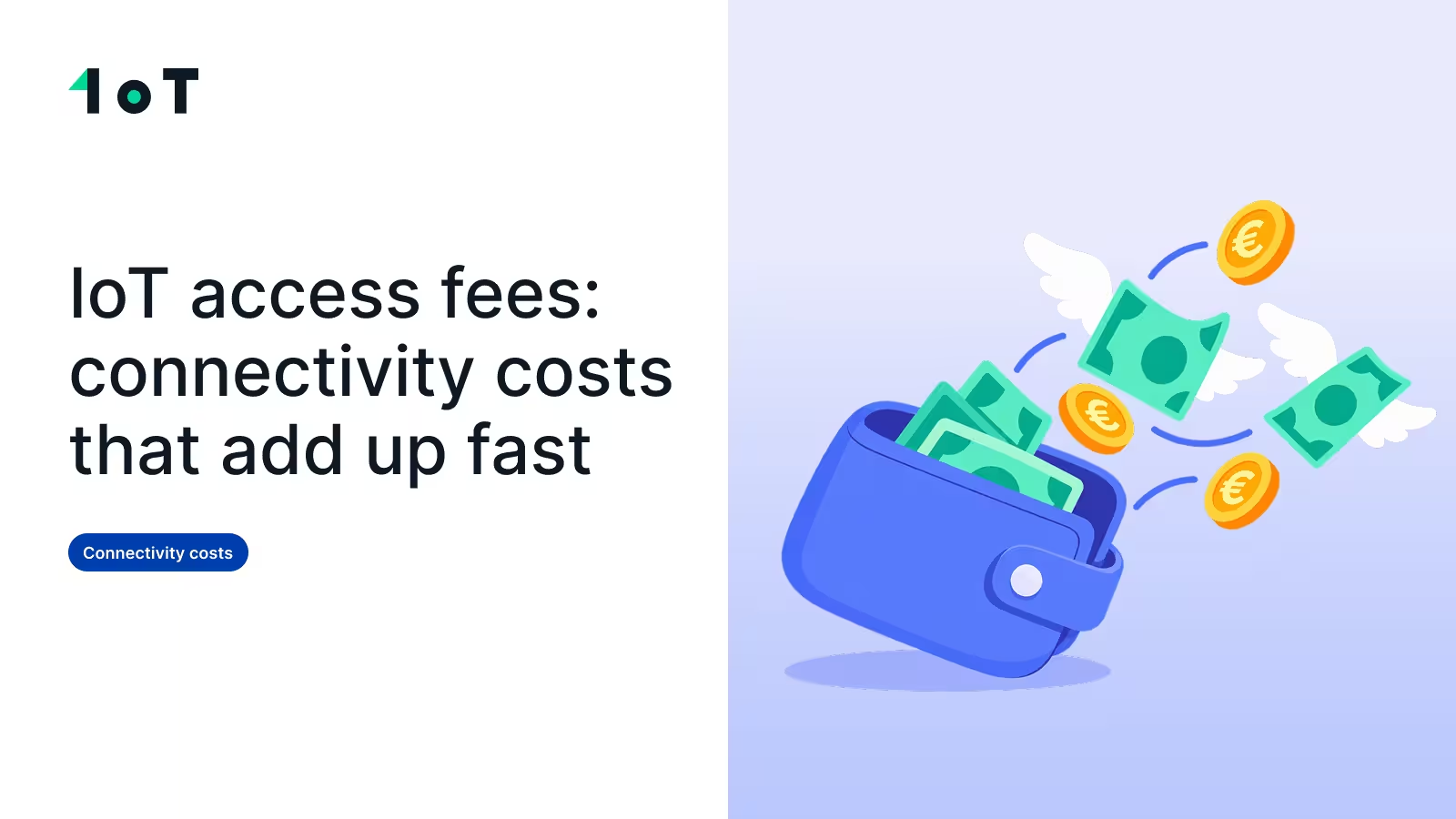
IoT connectivity is often priced around data consumption. The less data your device uses, the cheaper the deployment should be.
At least, that was the assumption.
Alongside data charges, some telecoms also charge access fees when a SIM registers on their network. Individually, those fees can look insignificant. Across thousands of devices, multiple roaming networks and years of operation, they can become a meaningful part of the total connectivity cost.
So what exactly are access fees, why do they exist, and why are they becoming increasingly common in IoT?
1. What exactly is an “access fee”?
In IoT, an access fee is a fixed charge some telecoms apply when a SIM registers on their network during a billing period.
It sits on top of your data charges, so it has nothing to do with how much data the device actually uses.
Think of it like a highway toll. You pay to get onto the road. Once you are on it, the toll is the same whether you drive 1 kilometre or 100.
IoT access fees work in much the same way.
A device might send just a few kilobytes of data, but the moment its SIM registers on a network, the full access fee can apply. And if that roaming SIM connects to multiple networks during the same billing period, you may end up paying multiple access fees too.
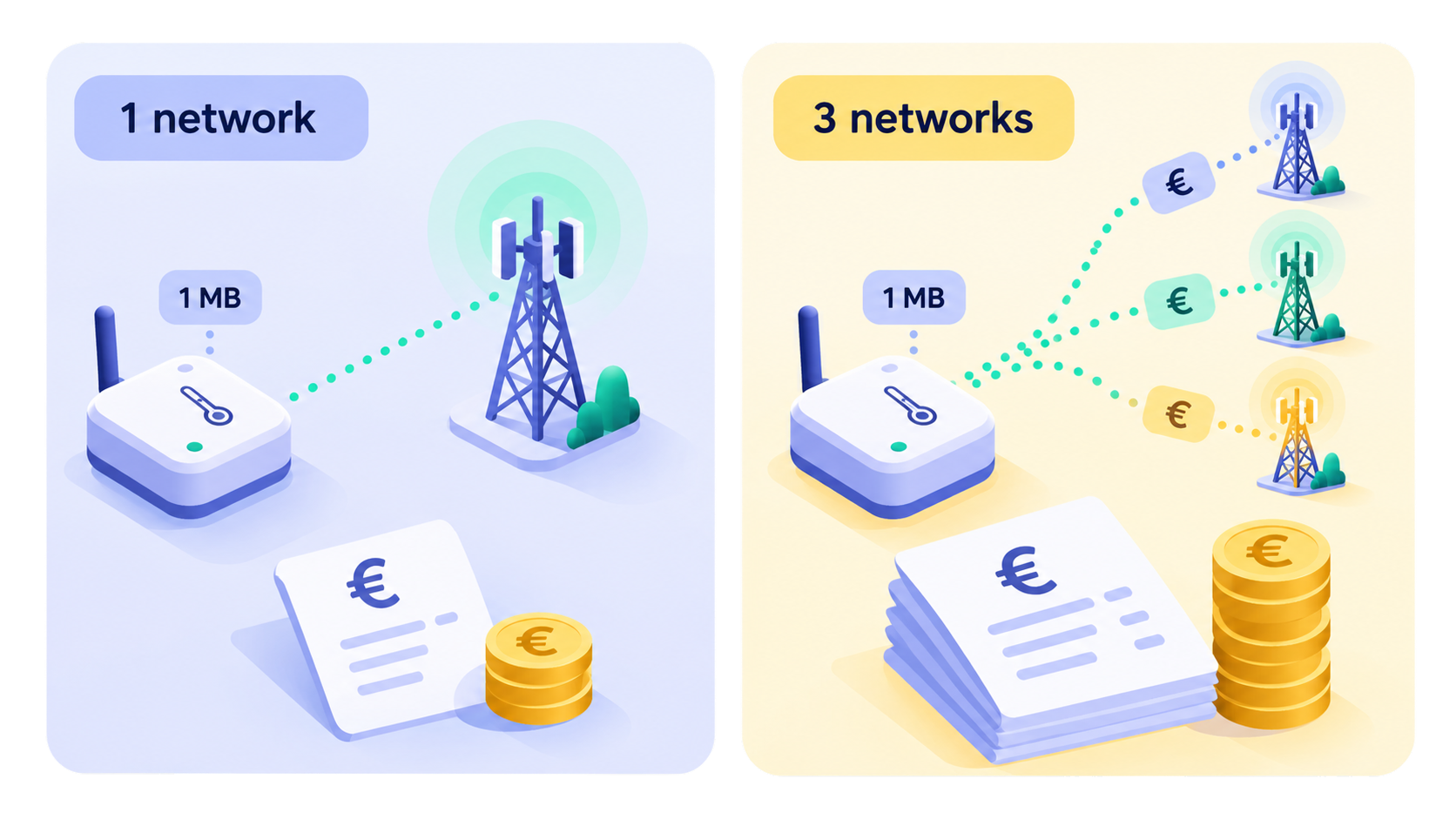
This is where a small fixed fee can start to matter.
For a high-data device, a fixed fee might barely register. But for low-data IoT deployments, the access fee can easily become one of the biggest parts of the connectivity bill.
2. Why do access fees exist?
Traditional telecom pricing was built around phones where customers typically use enough data to make the business model work.
IoT devices are often very different.
A smart meter might wake up, send a tiny amount of information and go back to sleep. A sensor might communicate only a few times per day. Some devices consume only a few megabytes in an entire month.
But low data usage does not mean zero cost for the network.
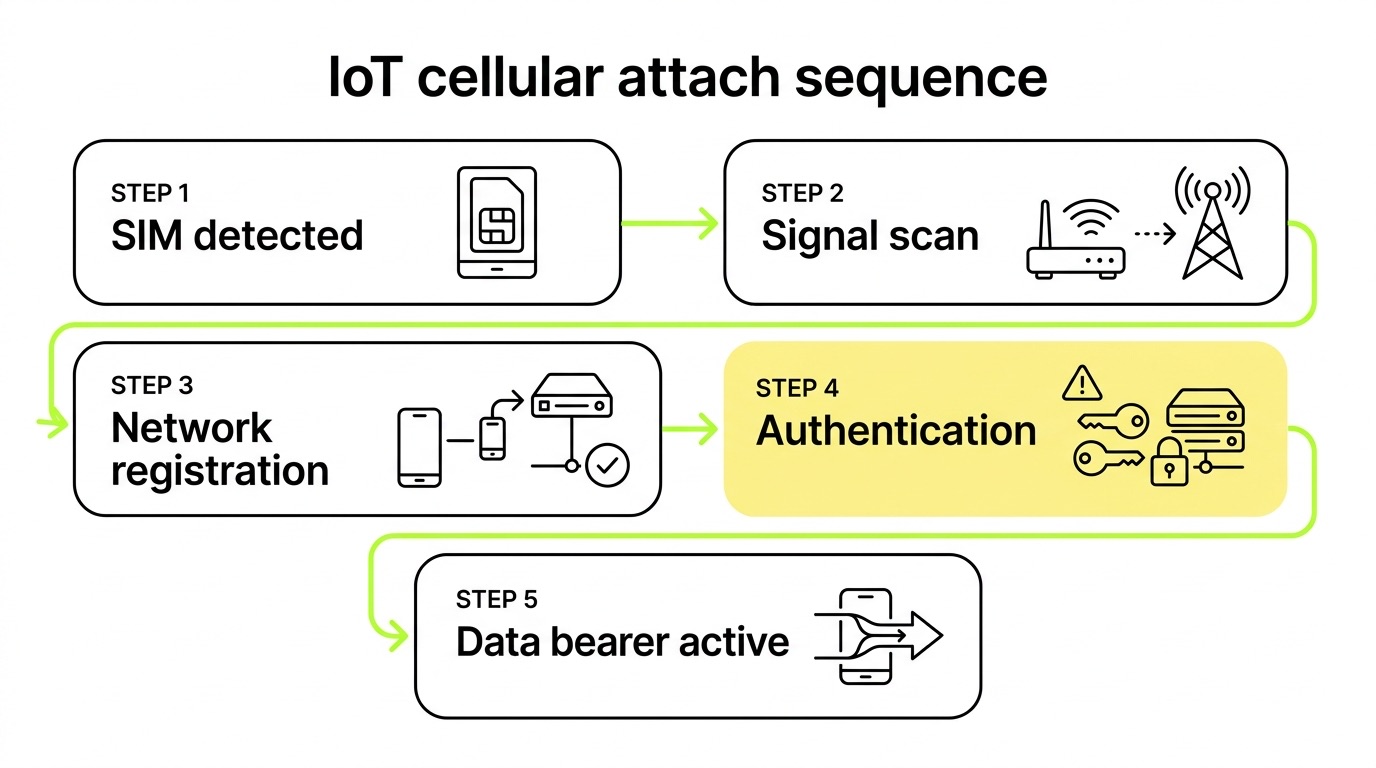
Access fees became increasingly common with low-data technologies such as NB-IoT and LTE-M. Even a device that sends almost no data still has to register, authenticate, signal and remain available on the network. That creates costs that are not directly tied to the amount of data transferred.
In other words, low data usage did not mean low network costs. Telecoms needed a way to close that gap.
Over time, similar fee structures have made their way into wider cellular connectivity, including 4G and 5G roaming.
3. How are access fees billed?
This is where access fees can become especially difficult to predict.
The trigger is usually simple: a SIM registers on a network during a billing period, and the fee applies.
How much data it actually sends may barely matter. A device using 1 KB and another using 100 MB can end up with the exact same access charge. If the SIM registers again the following month, the clock starts again.
Now add roaming.
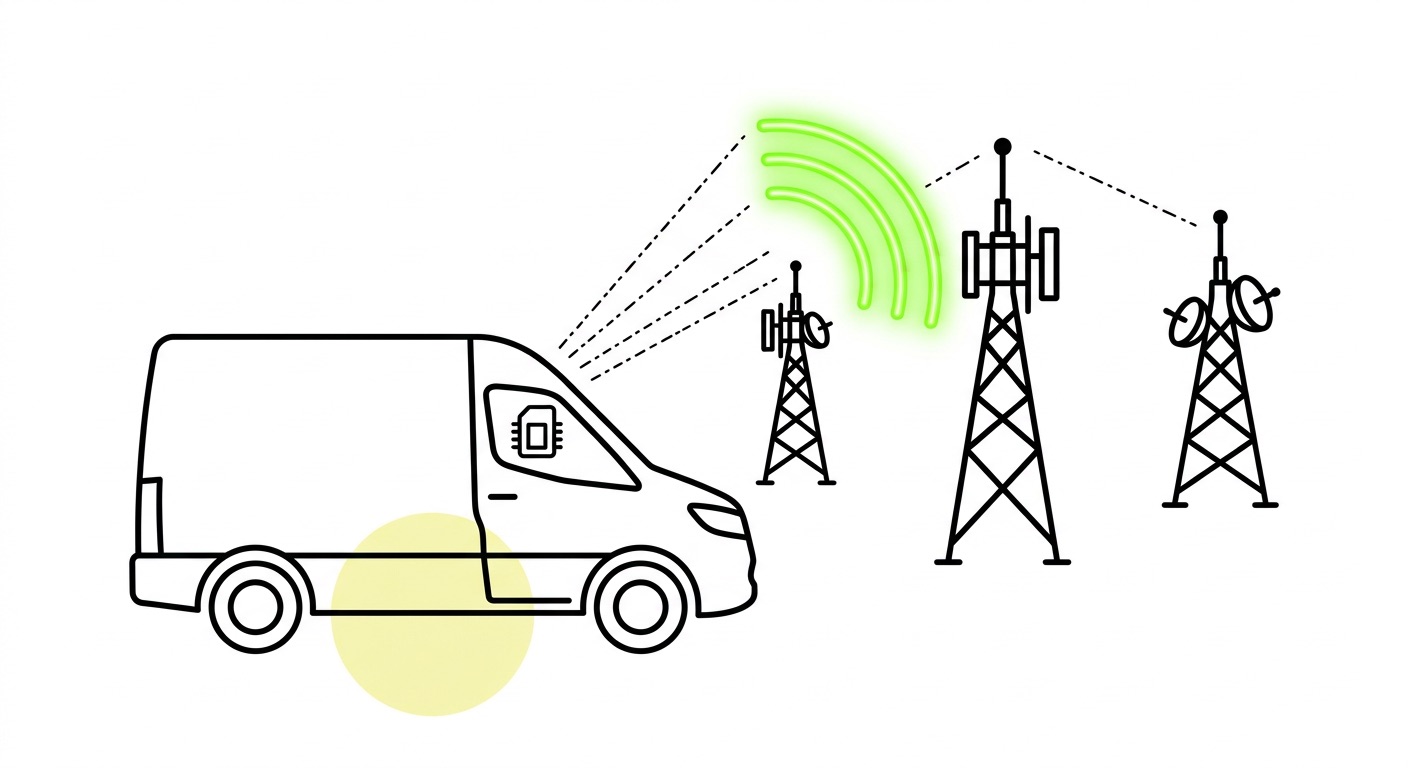
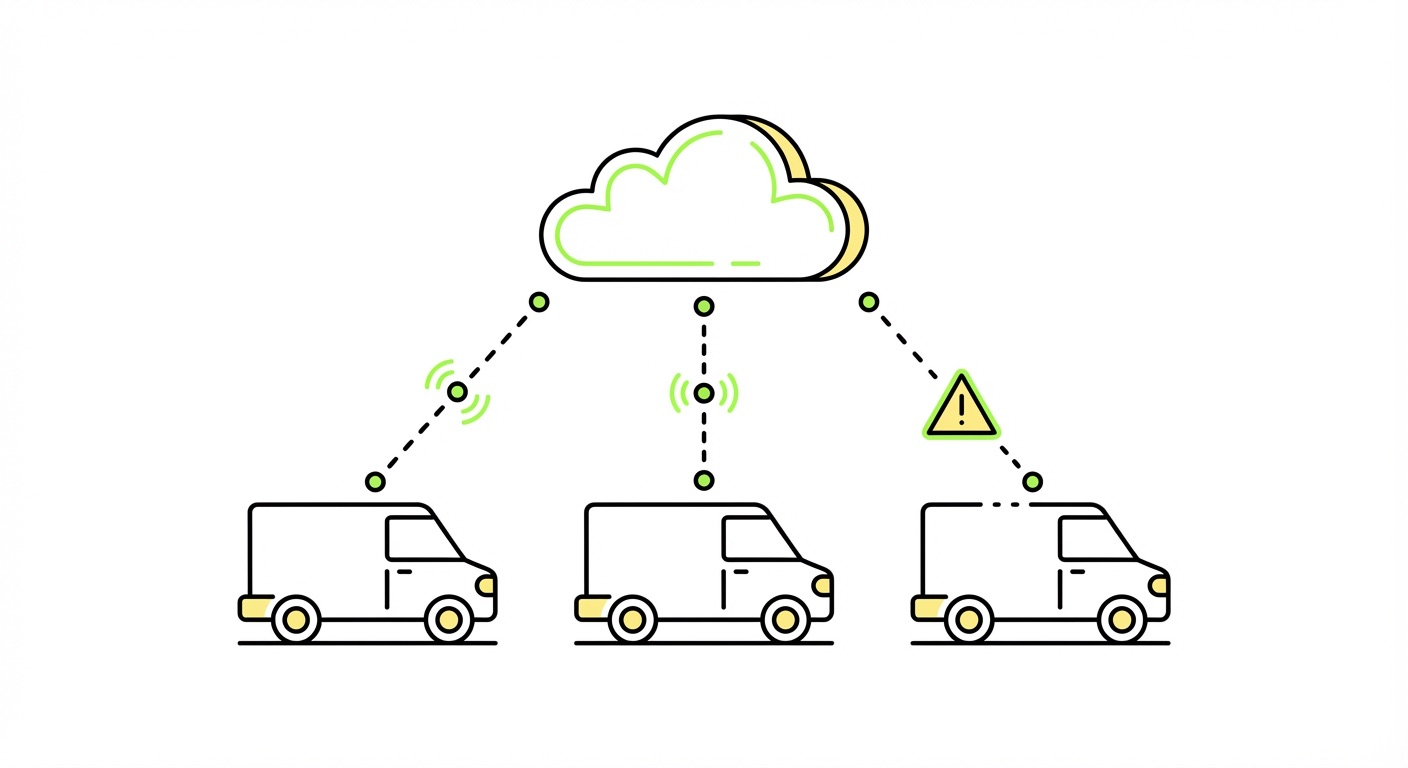
A device might connect to one network this month and three the next. If each of those networks charges for access, one SIM can suddenly pick up three separate fees without using a single extra megabyte of data.
That creates an awkward trade-off for global IoT. Multi-network connectivity is valuable because it improves coverage and resilience, but if every additional network can trigger another fixed charge, the same flexibility businesses want can also make costs harder to predict.
Same device. Same usage. Different bill.
A €0.10 access fee may not sound significant. Across 100,000 devices, however, that becomes €10,000 per month before data usage is even considered.
And if devices register on more than one chargeable network during the billing period, that number can grow further.
That’s what makes these fees tricky to forecast.
You can estimate how much data your fleet will use. You can predict how often devices will communicate. What is much harder to predict is exactly which roaming networks every SIM will land on, how many it will use, and which of them will come with an access fee.
For a handful of SIMs, that may be manageable.
Across thousands of devices expected to stay connected for five, ten or even more years, those small unknowns stop being small.
4. A More Predictable Approach to IoT Connectivity Costs
Global connectivity should make an IoT business model easier to predict, not harder.
At 1oT, access fees are not passed on as separate, network-by-network charges.
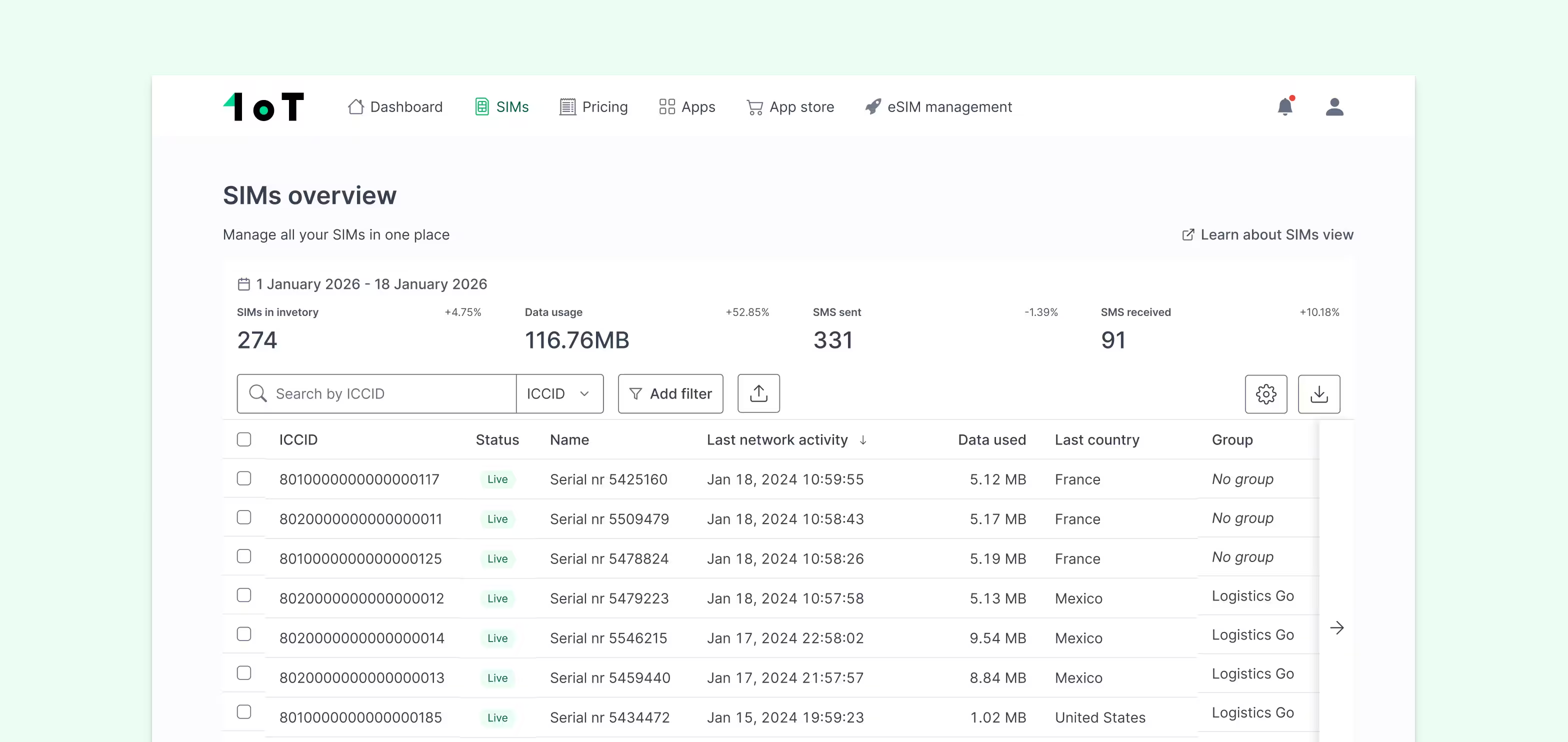
Instead, customers get a simpler pricing model based on a monthly SIM fee and data usage.
That means you do not have to estimate which roaming networks your devices might use in a given month, or how many separate access fees that could trigger.
Your devices can move between networks without turning every network registration into another line item to account for.
For large deployments, that makes a real difference. Costs are easier to forecast, budgeting becomes more straightforward, and scaling does not mean adding another layer of telecom billing complexity.
The benefit is simple: more predictable connectivity costs, fewer variables to model, and fewer surprises on the invoice.
The Bigger Picture: Predictability Matters More Than Ever
IoT devices are becoming more efficient and using less data. But if a growing share of connectivity costs is fixed, lower data consumption does not always translate into proportionally lower connectivity costs.
Access fees are not necessarily a problem simply because they exist. Telecoms have real costs associated with keeping millions of IoT devices connected, even when those devices consume very little data.
The bigger issue for IoT businesses is predictability.
A device can use the same amount of data month after month and still end up costing more depending on which networks it registers on.
Now multiply that uncertainty across thousands of devices spread over five or ten years and, suddenly, a small network-level fee is not so small anymore.
That is why IoT connectivity pricing cannot be judged on price per megabyte alone.
For businesses building global products, the better question is simpler: as you scale, do your connectivity costs stay clear, stable and easy to plan for?
Frequently Asked Questions
Are access fees charged by every telecom?
No. Access fee structures vary between telecoms, networks and commercial agreements. Some may charge them, while others may bundle similar costs into different pricing models.
Are access fees the same in every country?
No. Fees can vary significantly depending on the telecom, market and roaming agreement. A global deployment may therefore face different access costs depending on where devices connect.
Can access fees change over time?
Yes. Telecom pricing is not static, and access fees can increase or change as commercial agreements are updated. This is one reason long-term IoT cost forecasting can be difficult.
How can businesses reduce the impact of access fees?
The biggest advantage usually comes from having a connectivity model that makes these charges predictable. This can include consolidated pricing, careful network selection and working with a connectivity provider that absorbs or simplifies network-specific charges, just like 1oT.
Do access fees matter for fixed-location IoT devices?
They can. Even a stationary device may register on different available networks over time, depending on coverage, roaming rules and network availability. The impact depends on the connectivity setup.








.avif)



.avif)