How to manage multi-network SIM cards in fleet vehicles

Mikk Lemberg
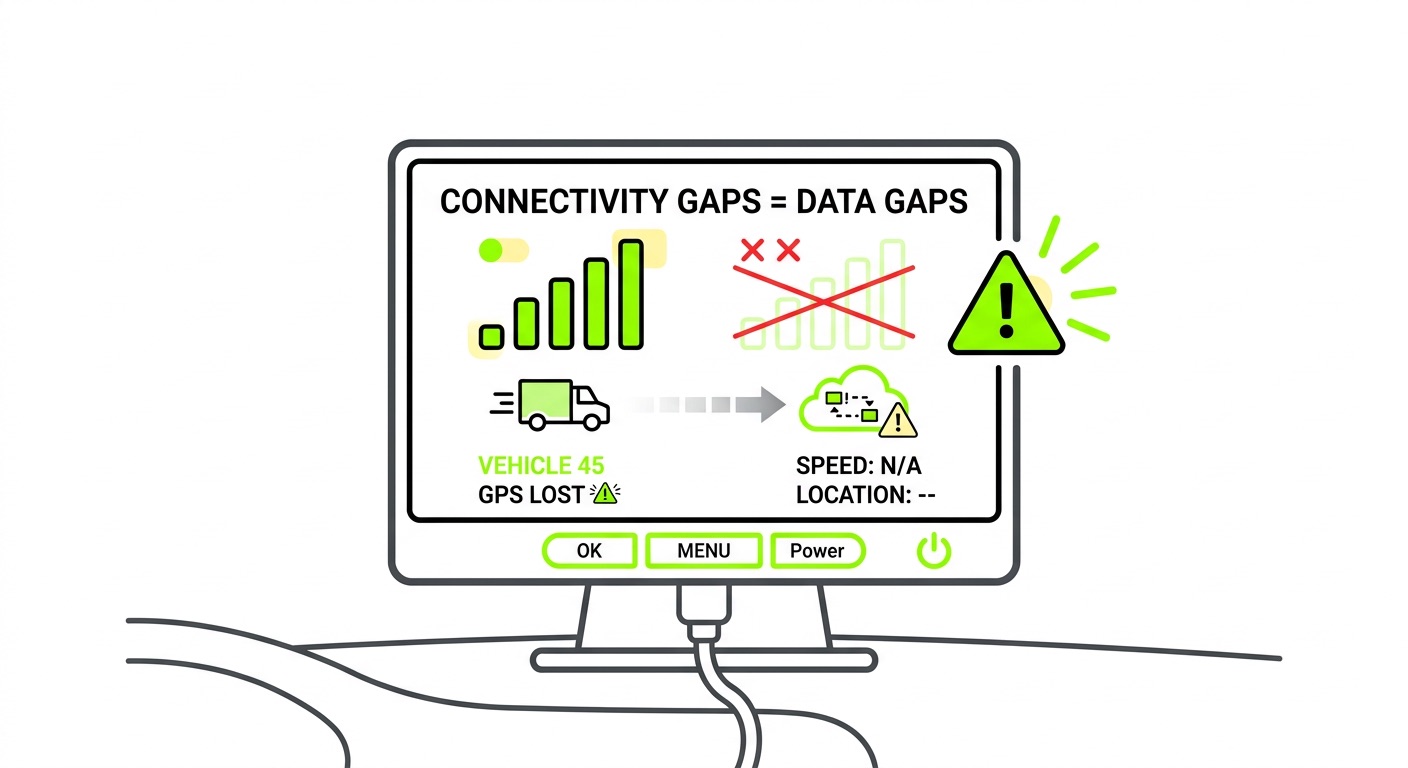
Fleet telematics works reliably – until it doesn't. When connectivity fails, the downstream effects compound fast: incomplete hours-of-service records, regulatory exposure from reporting gaps, and lost data that can't be reconstructed after the fact.
Most connectivity failures in fleet deployments aren't caused by bad hardware or poor coverage. They stem from configuration decisions made before deployment, SIM types chosen without understanding roaming behavior, and a lack of visibility once devices are in the field. This guide covers what multi-network SIMs are, how they behave in moving vehicles, and what operational practices actually reduce failure rates at scale.
In this article
- What makes a SIM "multi-network"
- Why single-carrier SIMs fail fleet deployments
- Steered vs. non-steered: why it matters for vehicles
- eSIM and remote profile management in fleet contexts
- Six operational best practices
- Controlling data costs at scale
- Frequently asked questions
- Key takeaways
What makes a SIM "multi-network"
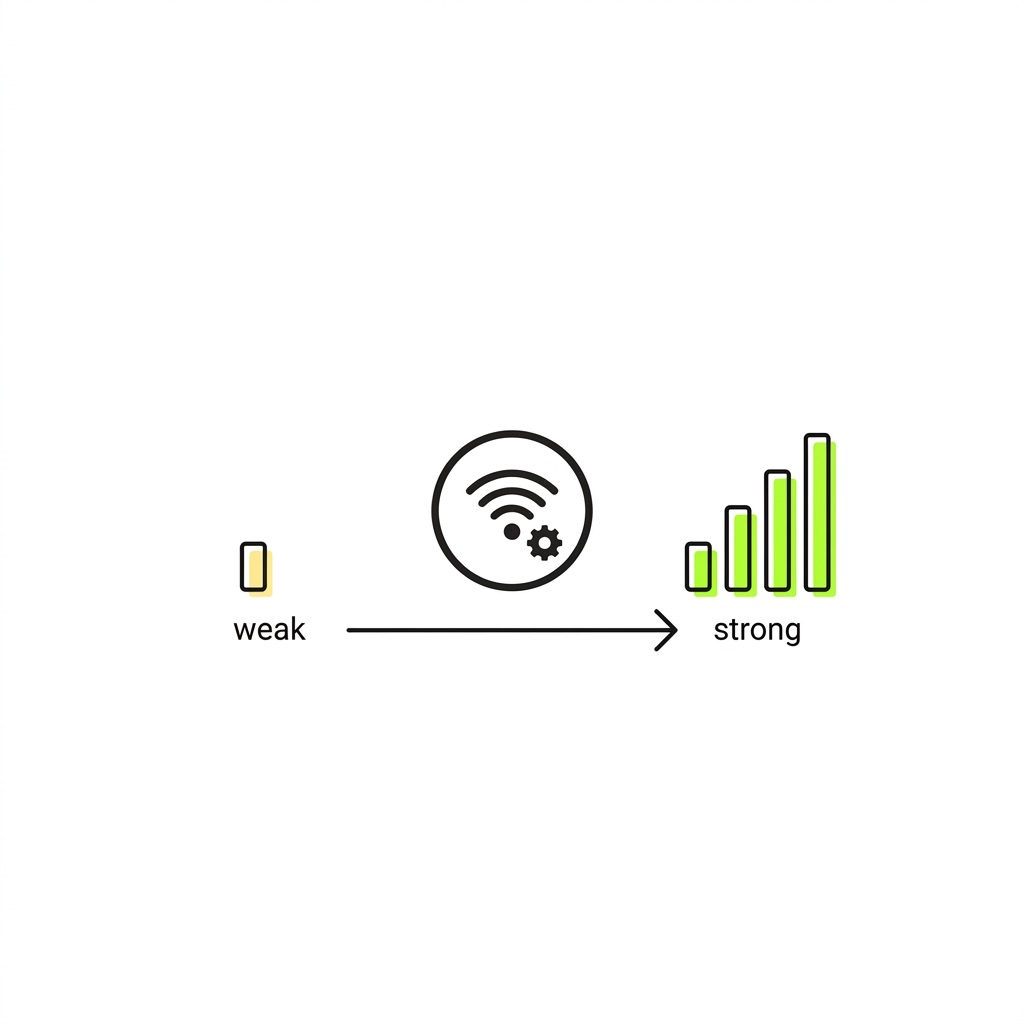
A standard SIM card is tied to a single mobile network operator. When a vehicle crosses into a region where that operator has no coverage or no roaming agreement, the device goes dark. A multi-network SIM solves this by holding roaming access agreements across hundreds – sometimes over a thousand – networks globally, allowing the device to automatically connect to whichever permitted network has the strongest signal.
There are two main technical approaches worth understanding:
- Multi-IMSI SIM: A physical SIM with multiple pre-loaded subscriber identities, each tied to a different carrier profile. Network switching is handled by on-card rules, typically based on location. Profiles are static – they cannot be added or removed without replacing the SIM.
- eUICC (eSIM): An embedded SIM that can download, enable, and delete carrier profiles over the air. The device ships with a default profile, and additional profiles can be pushed remotely without physical access to the device.
For fleet deployments at scale, eSIM is the more operationally resilient choice. It eliminates the need for SIM swaps when entering new markets, accommodates roaming restriction timelines through periodic profile rotation, and protects against network sunsets without hardware replacement. If you're still evaluating both approaches, the comparison of multi-IMSI SIMs vs. eUICC is a useful starting point.
Why single-carrier SIMs fail fleet deployments
The fundamental problem with single-carrier SIMs in fleet vehicles is that they create a single point of failure tied to one operator's network availability, roaming agreements, and pricing decisions.
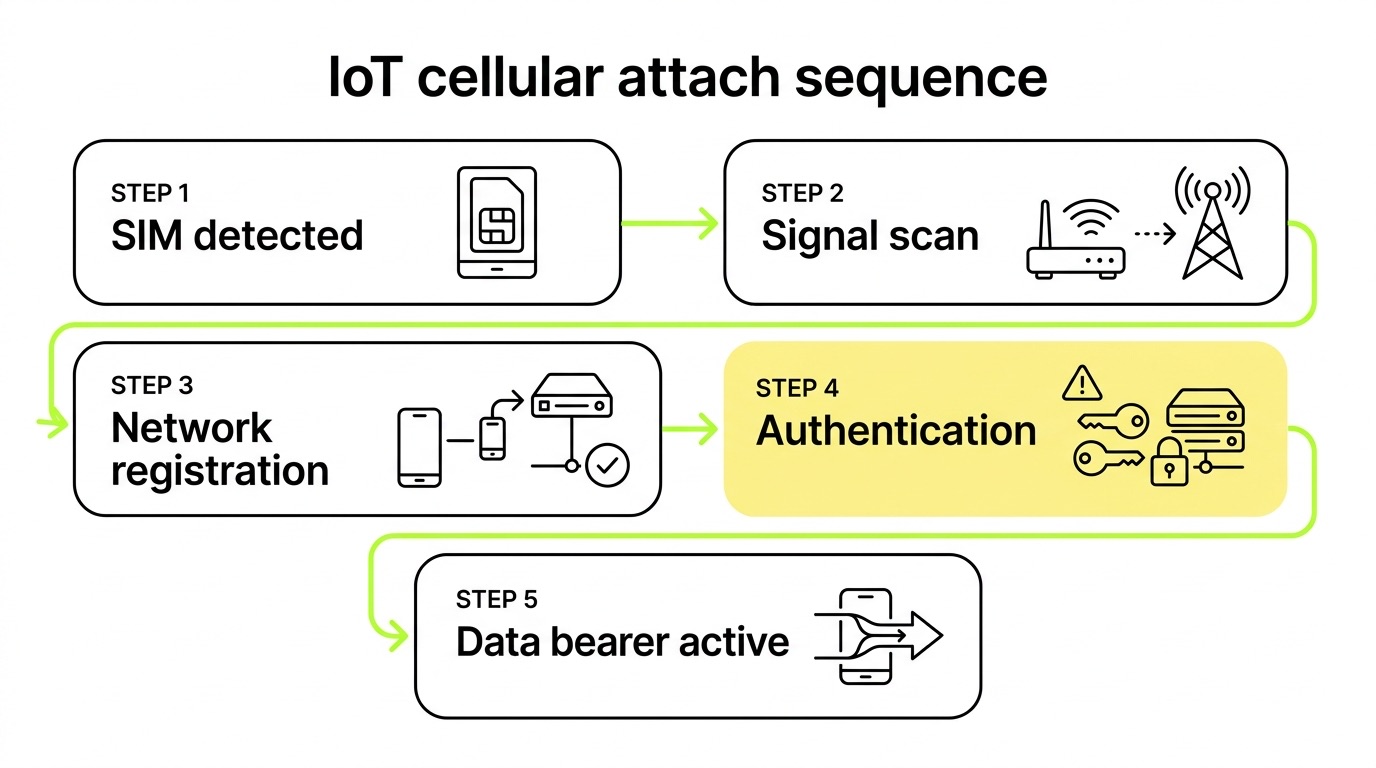
We've seen this pattern repeatedly: a fleet operator deploys across several countries using a SIM from their home-country MNO. Everything works in the primary market. Vehicles then cross a border, roam onto a network that the home operator has blacklisted, enter an attach-reject loop, and drain battery while the device appears connected. The telematics platform shows the device as active. It isn't.
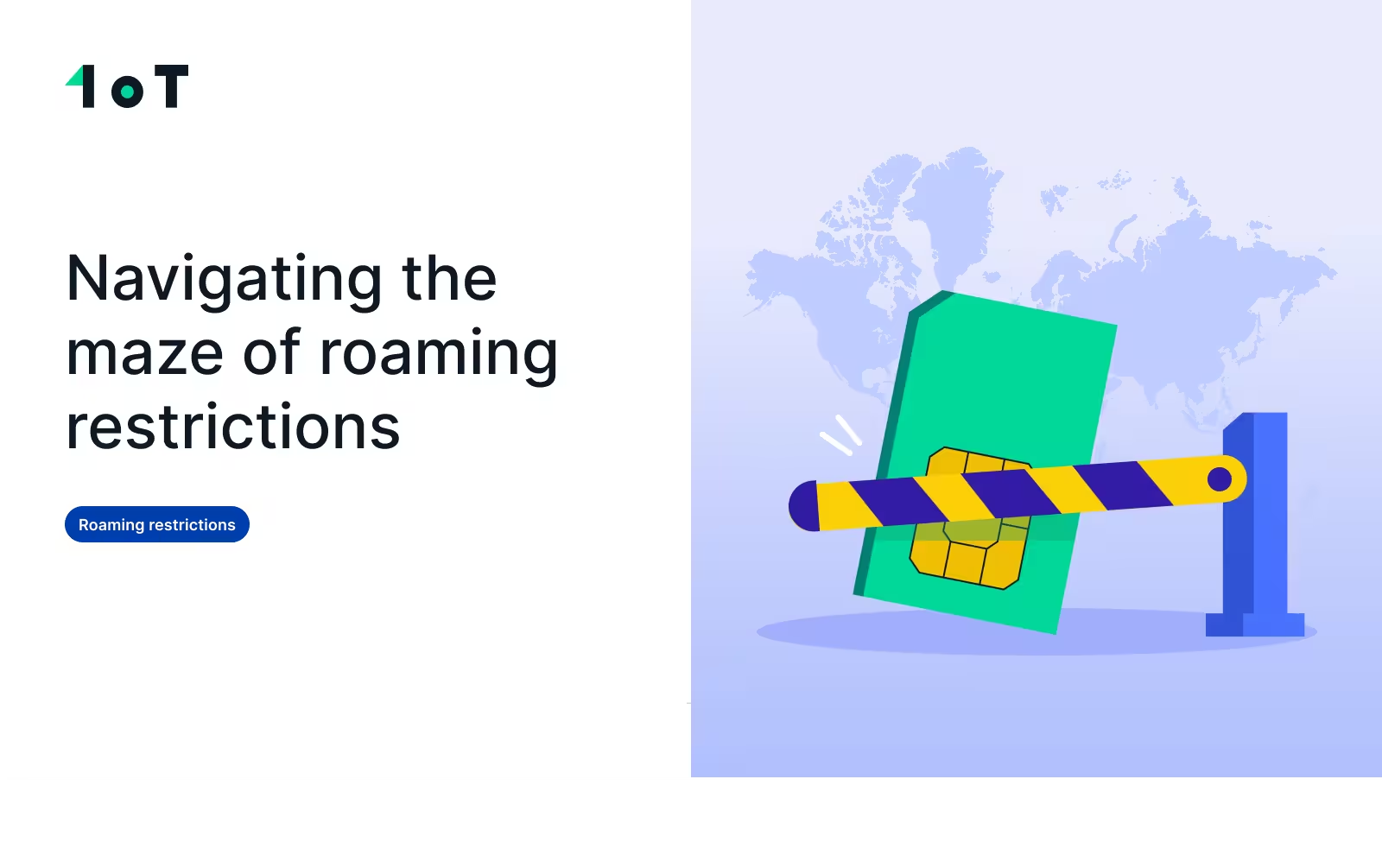
Beyond outright failures, permanent roaming restrictions compound the problem at a regulatory level. Many operators and regulators limit how long a device can roam on a foreign network before triggering restrictions or surcharges: Brazil prohibits non‑local profiles from roaming beyond 90 days, and Turkey prohibits IoT devices from roaming on foreign networks beyond about 90 days in any 120‑day period, after which SIMs or IMEIs may be blocked. These aren't edge cases; they're predictable operational problems for any cross-border fleet. According to common connectivity failure patterns in fleet telematics, the root causes consistently trace back to:
- APN misconfiguration – wrong string or authentication mismatch
- Registration on forbidden or blacklisted roaming networks
- Poor network reselection when moving between cells
- Single-carrier dependency with no failover path
- Legacy radio technology on networks being sunset
Steered vs. non-steered: why it matters for vehicles
Not all multi-network SIMs behave the same way. Steered SIMs are configured to prefer a specific operator – typically a carrier with whom the SIM provider has a cost agreement – even when that network is congested, slow, or degraded. The device tries the preferred network first, receives poor throughput or an outright rejection, and may fail to reselect automatically.
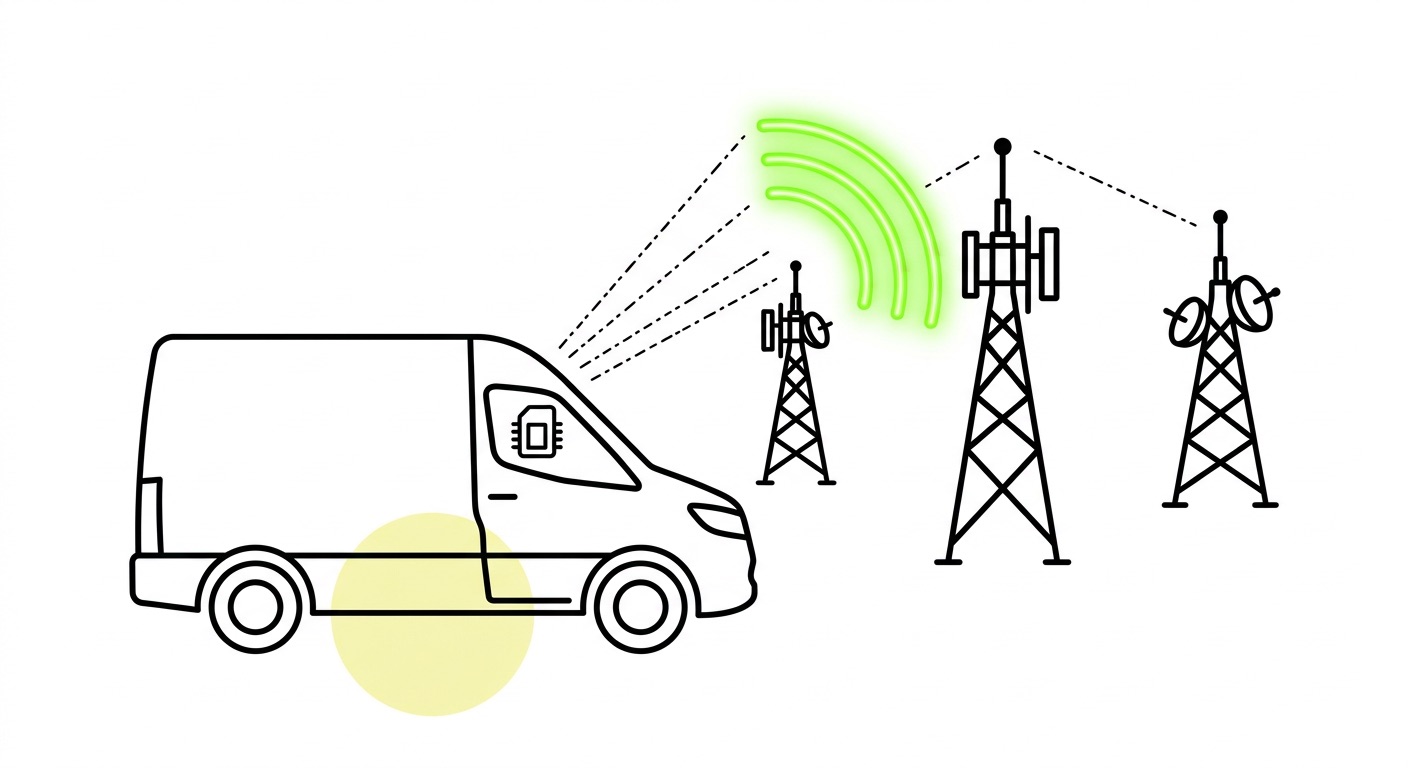
Non-steered SIMs carry no preferred network list. They connect to the strongest available permitted network and reselect automatically if conditions change. For a vehicle passing through different coverage zones throughout a single working day, this distinction has real operational consequences.

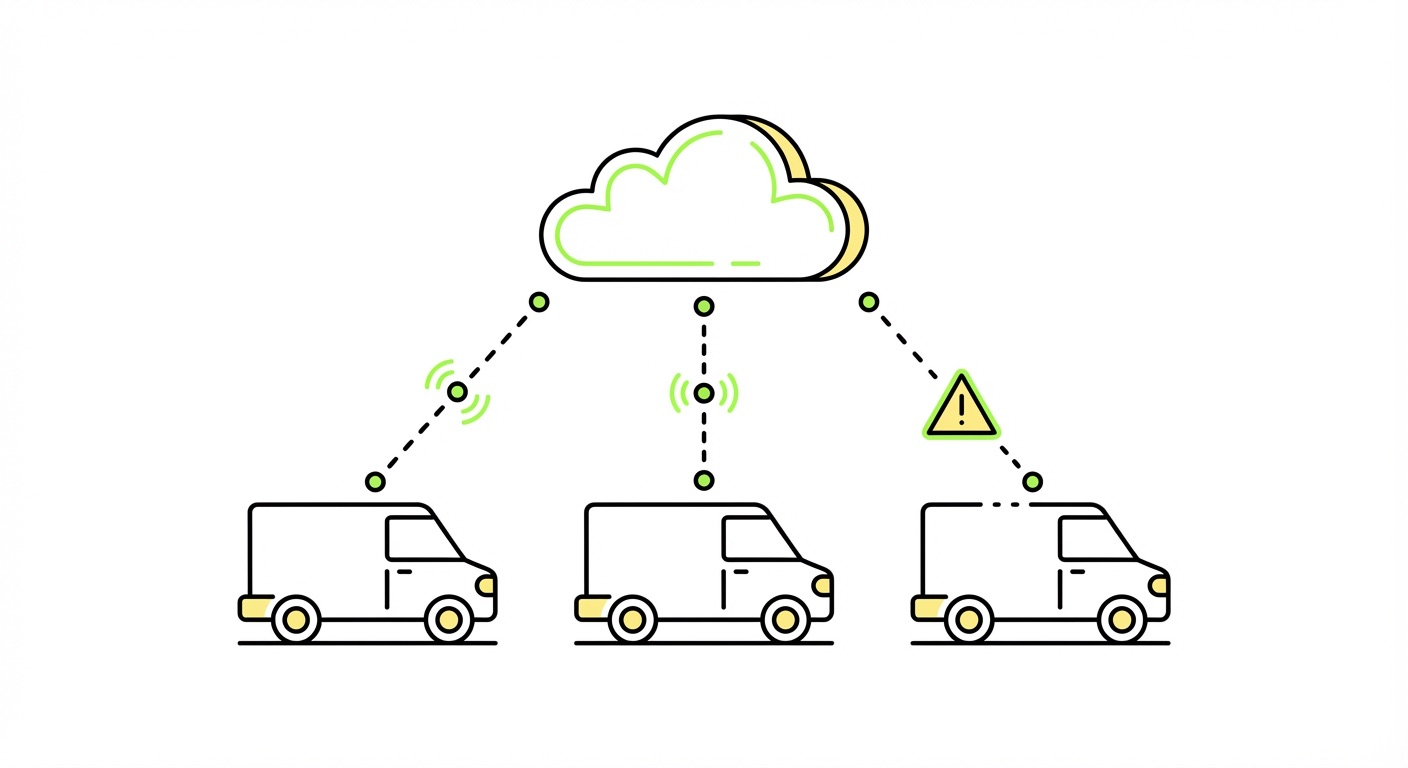
The redundancy story matters as much as the coverage story. Multi-network access isn't just about reaching more countries – it's about having failover within each market when one operator's infrastructure has a localized outage or congestion event. A non-steered SIM with access to multiple operators per country handles this by design; a steered SIM often doesn't. Steering trades connectivity reliability for cost optimization on the provider's side, not the customer's. The difference between steered and non-steered SIMs is worth reading before finalizing your SIM selection, particularly if you're evaluating suppliers who don't disclose their steering policies upfront.
eSIM and remote profile management in fleet contexts
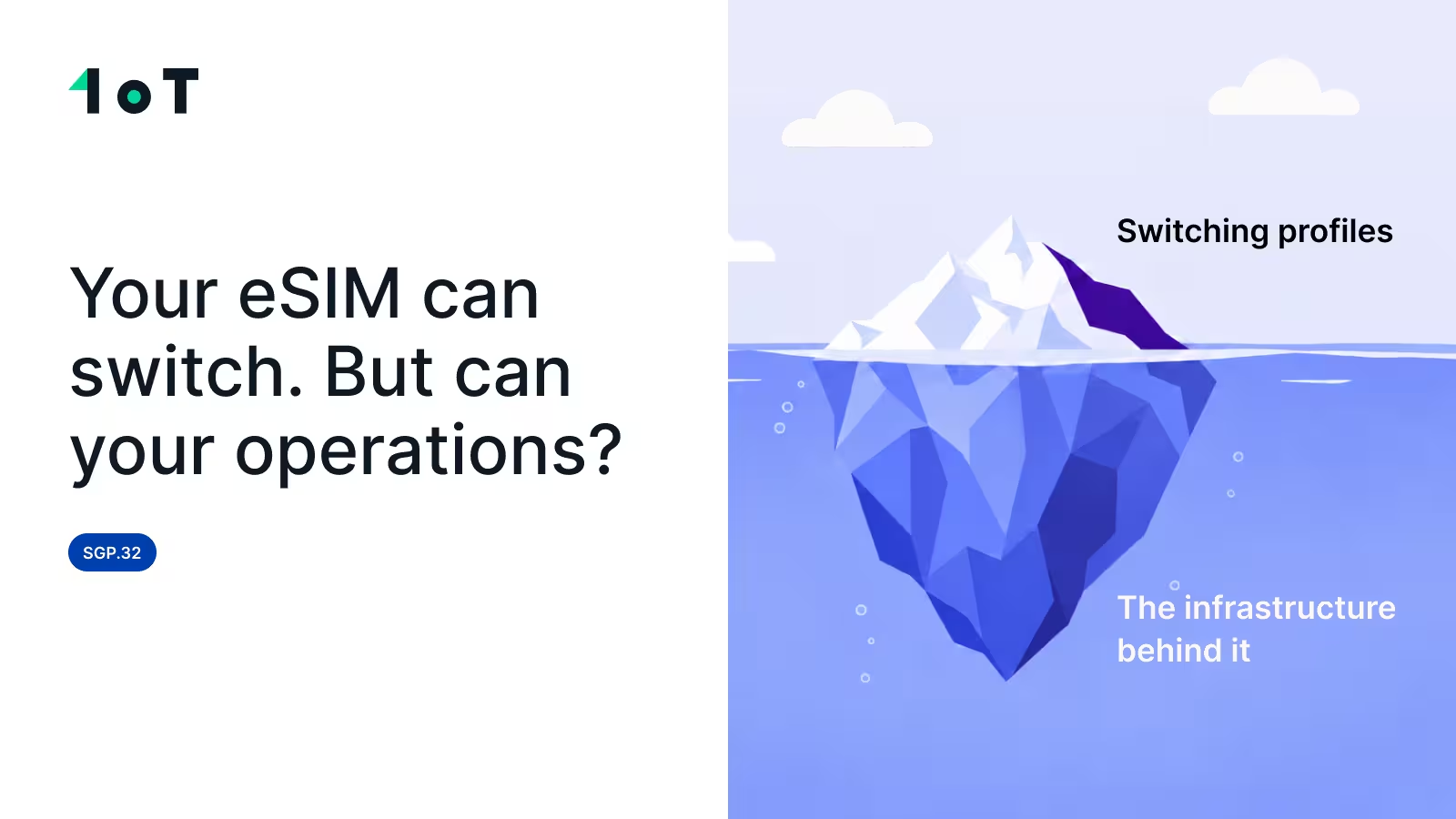
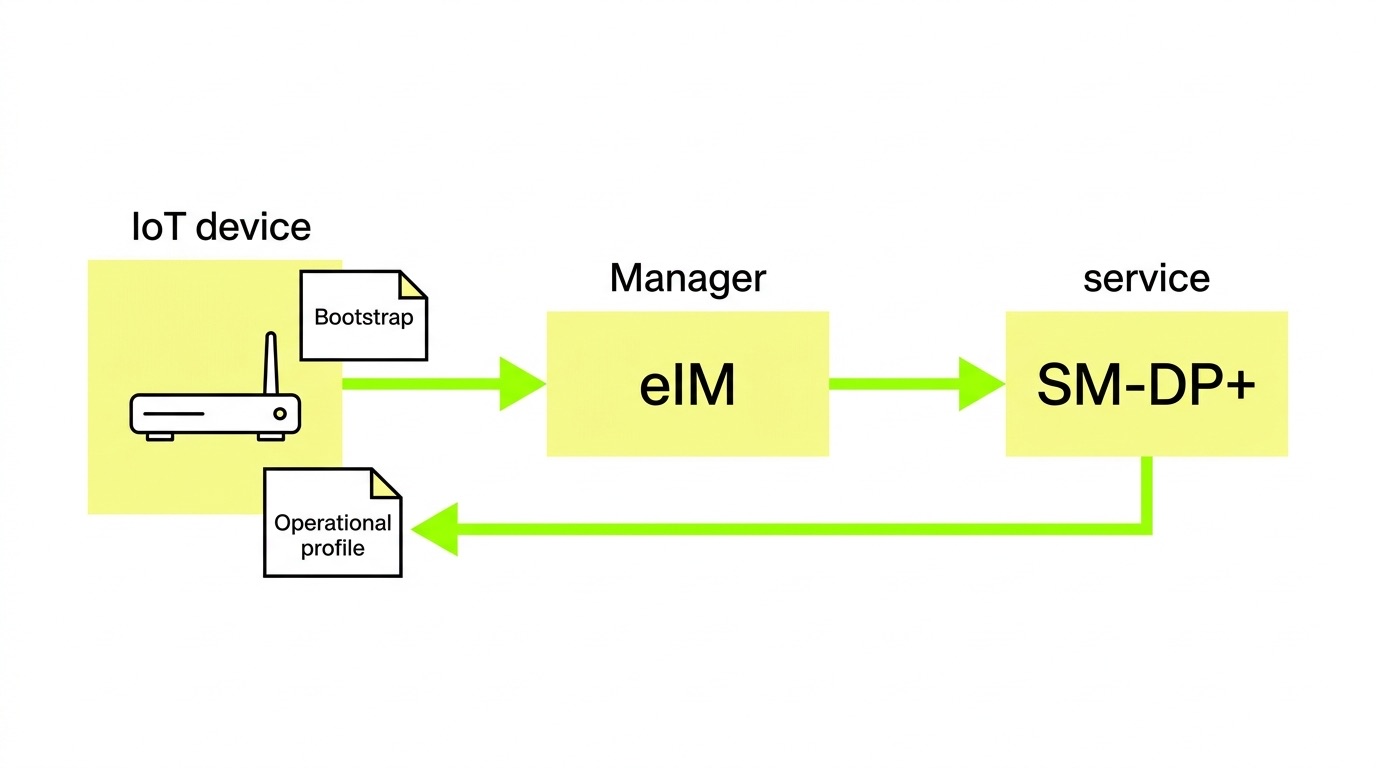
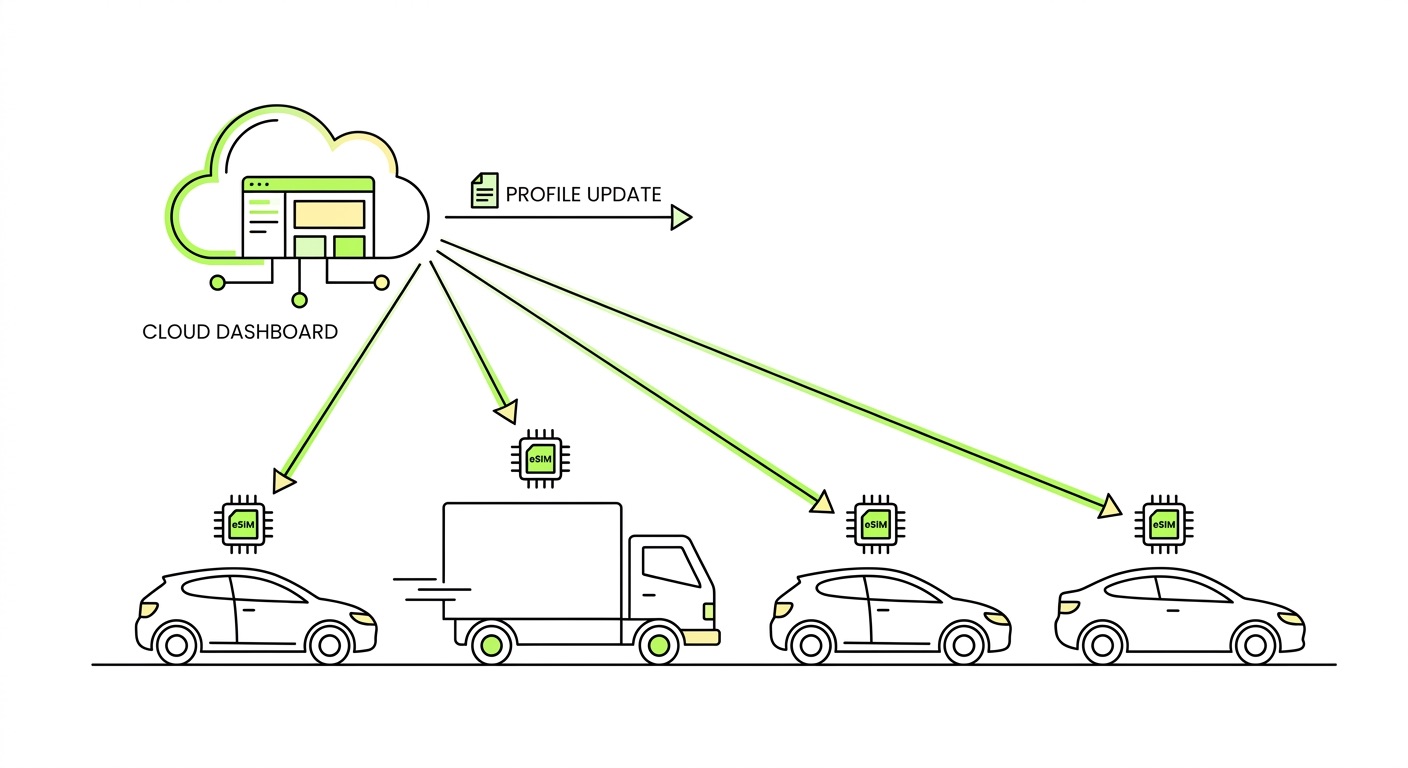
The GSMA's SGP.32 IoT eSIM specification introduces the eSIM IoT Remote Manager (eIM), which handles profile operations – download, enable, disable, delete – without requiring SMS. This matters for constrained networks where SMS delivery is unreliable. The eIM communicates with the SM-DP+ server hosting carrier profiles and can push changes to deployed devices without physical intervention. For a deeper explanation of how this architecture works, the introduction to the IoT eSIM standard SGP.31/32 covers the key components.

For fleet OEMs, remote profile management resolves several practical problems that traditional SIMs cannot:
- Roaming restriction compliance: Rotating profiles every 45–90 days to stay within permanent roaming limits, without sending a technician to the vehicle
- Carrier migration: Switching from a sunset network to a current-generation operator without a hardware recall
- Regional optimization: Deploying a local carrier profile when a vehicle enters a new market to improve throughput and reduce roaming costs
- Automatic fallback: The M2M eSIM specification (SGP.02) includes a fall-back mechanism that switches to an alternate profile if connectivity is lost on the active one
It's also worth understanding how this differs from consumer eSIM. The differences between consumer eSIM and M2M eSIM are significant at the architecture level – consumer eSIM is designed for user-initiated profile changes via a local profile assistant on the device, whereas M2M and IoT eSIM use server-driven operations suited to unattended deployments. Specifying the wrong eUICC type will limit your remote management options after production, and that's a costly mistake to correct.
One hardware caveat worth flagging: the cellular module must support eSIM profile operations, including BIP (Bearer Independent Protocol) for over-the-air transactions. Validating module compatibility before a production run is far less expensive than discovering the limitation afterward.
Six operational best practices
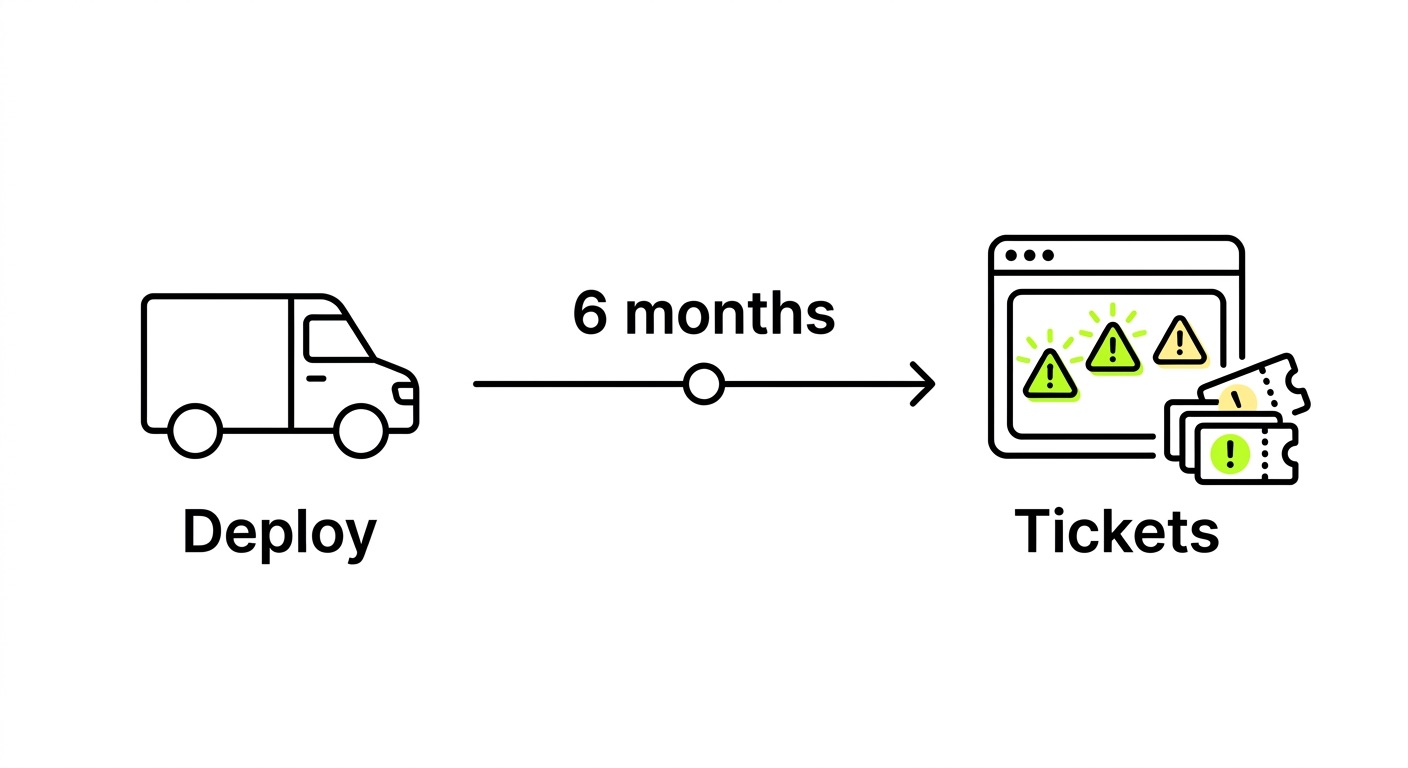
These are the practices that separate fleet deployments that stay connected from those that generate field escalations six months after launch.
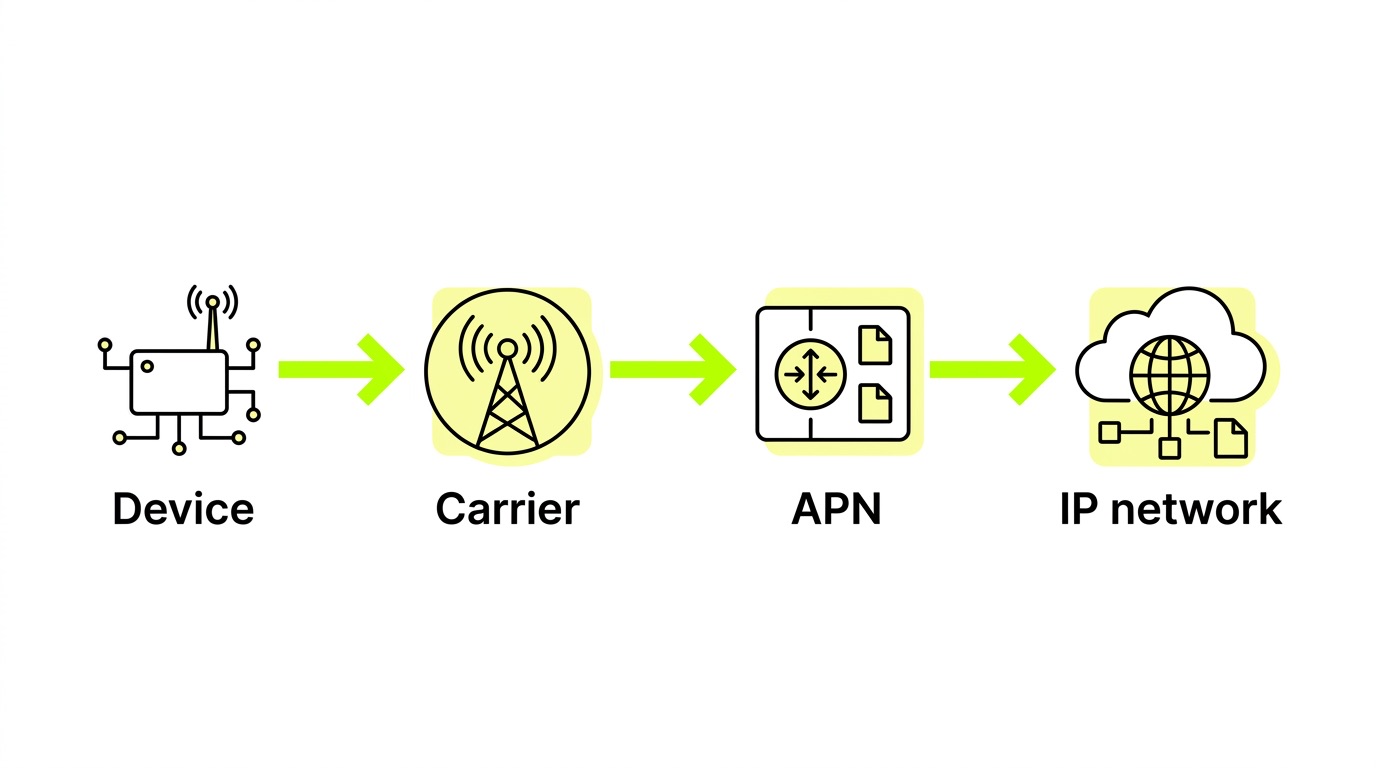
- Validate APNs per region before scaling. APN misconfiguration is the most common and most preventable fleet connectivity failure. A device may register on the network successfully but fail to establish a data session because the APN string is wrong or the authentication type – PAP vs. CHAP – doesn't match. Validate APN configuration against each deployment country before rolling out at scale, not after the first batch of complaints. The IoT VPN, APN, and fixed IP guide explains how APN types work and when private APNs are appropriate.
- Use LTE-M for mobile assets, without exception. NB-IoT does not support cell handover, which means a moving vehicle drops its session every time it transitions between cells. LTE-M was designed with mobility in mind and maintains sessions across handovers. For any fleet telematics application involving vehicles in motion, LTE-M is the correct radio access technology.
- Enable automatic network registration. Devices should use automatic operator selection rather than being locked to a specific PLMN manually. Manual network locking recreates the single-carrier dependency problem in firmware, negating the redundancy benefit of a multi-network SIM.
- Deploy non-steered, multi-network SIMs with access to multiple operators per country. This provides both geographic coverage and within-market redundancy. If one operator has a regional outage or congestion event, the device reselects to the next best available network automatically.
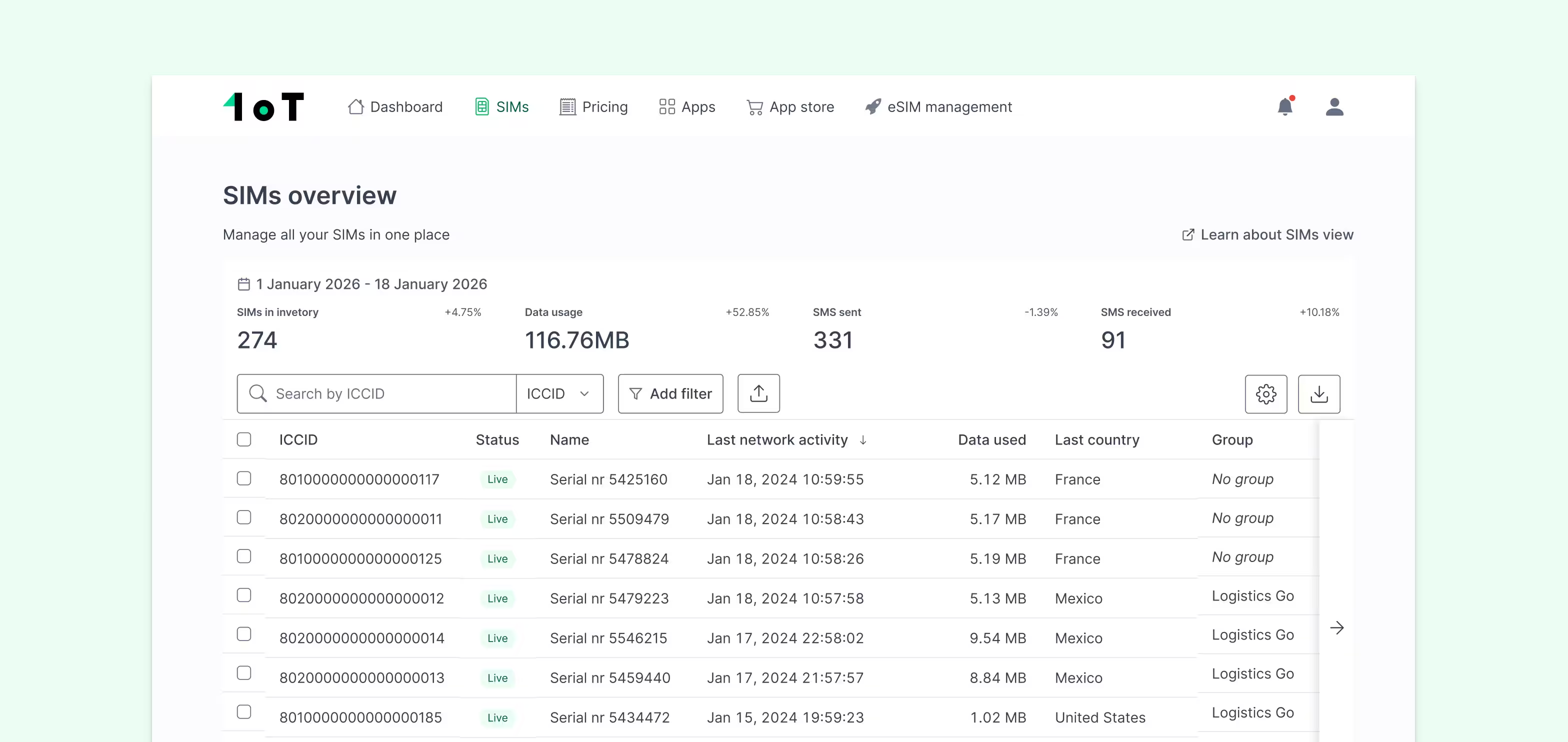
- Instrument session-level telemetry in your connectivity management platform. Real-time session data – when sessions start and end, which network was used, data consumed per session – is the difference between diagnosing a connectivity problem and guessing about one. Without this visibility, device silence is indistinguishable from a hardware fault, a network issue, or an APN misconfiguration. The SIM/eSIM troubleshooting checklist outlines the diagnostic steps that become possible when you have this data.
- Build exponential backoff into firmware reconnect logic. Firmware that retries connection aggressively after a failure can generate signaling storms – excessive attach requests that operators may throttle or flag. A reconnect strategy with exponential backoff and a defined retry ceiling prevents a temporary failure from escalating into a device suspension.
Controlling data costs at scale
Data costs in fleet deployments are predictable if you instrument them correctly. The main cost drivers are roaming on suboptimal networks due to steering policies, idle data sessions during vehicle downtime, and bill shock when devices enter new countries with different rate structures. Each of these is manageable with the right operational tooling.
Practical levers include:
- Data pooling: Aggregating usage across your entire SIM fleet rather than applying fixed per-SIM limits, which smooths out variability between active and inactive devices and avoids paying for unused allocation on quiet SIMs
- Usage-based automation: Triggering SIM state changes automatically when usage thresholds are crossed or when a device enters a specific geographic zone – for example, suspending data when a vehicle enters a depot overnight
- IMEI locking: Binding a SIM to a specific device IMEI so that if a SIM is removed and inserted into an unauthorized device, the session is blocked before costs accumulate
- On-device data reduction: Processing and filtering sensor data locally before transmission, particularly for high-frequency inputs that don't require cloud-side raw records
Workflow automation in a connectivity management platform can handle many of these controls without manual intervention – switching SIMs to cheaper data packages on deployment, sending alerts when usage spikes beyond expected patterns, and taking devices offline automatically if a session exceeds a defined threshold. For the device-level side of cost reduction, reducing mobile data usage and volumes covers complementary techniques.
Frequently asked questions
Why does my device show as registered on the network but still can't send data?
Network registration and data connectivity are separate states. A device can successfully attach to a network – which allows SMS – but fail to establish a PDP context (a data session) if the APN is missing, incorrect, or uses the wrong authentication protocol. Check the APN configuration in your connectivity management platform and verify using AT+CGDCONT? and AT+CGACT? on the module. If the APN is correct and the issue persists, test the SIM in a known-good device to isolate whether the fault is device-side or SIM/network-side.
What's the difference between a multi-network SIM and broad roaming coverage?
A multi-network SIM has access to permitted networks across many countries via roaming agreements, but the breadth and quality of those agreements varies by SIM provider. Roaming coverage means the SIM can attempt to connect in a given country; actual session stability depends on which specific operators are included, whether steering is applied, and whether the SIM carries access to multiple operators per country for within-market redundancy. Always validate coverage in your specific deployment geographies rather than relying on headline country counts alone.
When should we choose eSIM over a standard multi-network physical SIM?
If your fleet operates across multiple regions, is subject to permanent roaming restrictions, or you anticipate needing to change carriers without a field operation, eSIM with remote profile management is the right architecture. The decision point is straightforward: if you expect to need carrier changes after deployment, eSIM gives you that option over the air; a physical SIM does not, without a recall.
Key takeaways
- APN validation before scaling is non-negotiable – it's the most common preventable failure in fleet telematics and the easiest to address before rollout.
- Use LTE-M for all mobile fleet assets – NB-IoT lacks handover support and will drop sessions in moving vehicles.
- Non-steered multi-network SIMs provide both geographic coverage and within-market redundancy, two distinct reliability benefits that matter independently.
- eSIM with remote profile management (SGP.02 or SGP.32) is the right long-term architecture for fleets crossing borders or operating under permanent roaming restrictions.
- Session-level telemetry is the difference between managing connectivity and reacting to it – without real-time session data, failures are invisible until they become complaints.
If you're scoping connectivity for a fleet deployment or evaluating whether your current SIM setup can scale across markets, 1oT's fleet management connectivity and global coverage across 190+ countries are a practical starting point. We're happy to work through your specific deployment requirements – reach out to start the conversation.









.avif)



.avif)