From the client side: What managing 300K SIMs taught me about connectivity platforms

Andres Joosep
From the client side: What managing 300K SIMs taught me about connectivity platforms
Managing a massive fleet of IoT devices is rarely about the "big picture." It’s about the thousands of small, technical frictions that happen every day.
Before I joined 1oT, I was one of their clients. I spent years on the other side of the table — managing connectivity as a customer in the micromobility sector. I was responsible for more than 300,000 active SIMs across five different connectivity providers. Every roaming mistake, every delayed alert, every manual workaround translated directly into cost, customer impact, and stress.
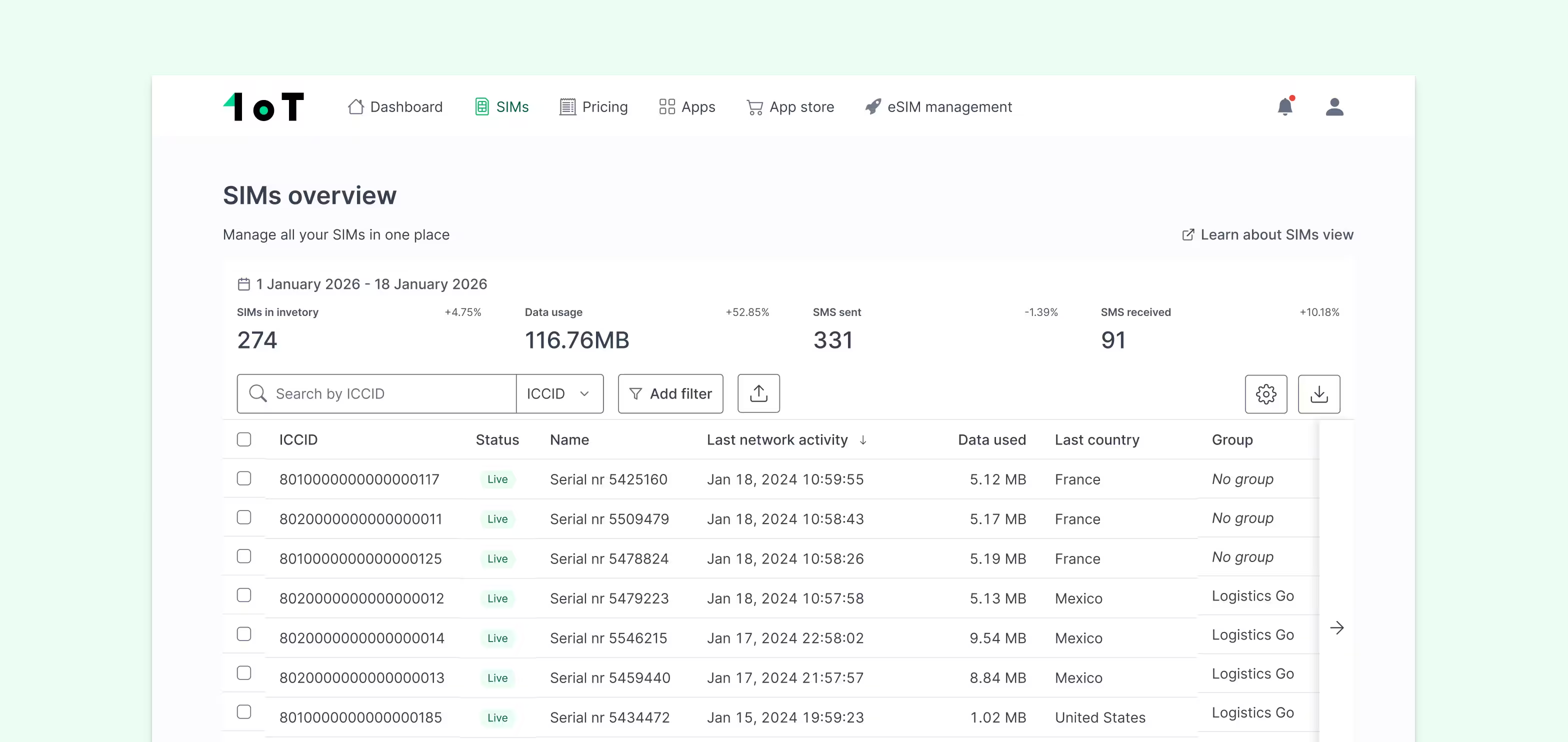
Over that time, I’ve worked with legacy connectivity management portals that buried critical information behind layers of complexity, and with minimalist platforms that left operators doing most of the work themselves. When we started working with 1oT Terminal, 1oT's connectivity management platform, it became the tool I relied on every single day to keep operations under control.
That experience is what shaped how I evaluate connectivity tools today — and why, from a user’s perspective, the 1oT Terminal stood out long before I joined the company.
When you are responsible for a fleet of that scale, you don't need more "features" for the sake of it; you need clarity, speed, and reliable automation. Here is why, from a user’s perspective, the 1oT Terminal stands out as the benchmark for connectivity management.
1. Workflow automation: your global "geofence"
In my previous role, "unwanted fees" were a constant source of anxiety. A single device ending up in a high-tariff country or roaming on a non-preferred network could quickly drain a month’s budget. At 300,000 devices, you cannot manually monitor borders.
The 1oT Terminal’s Workflow Automation allowed me to build a proactive defense system. Instead of checking reports after the costs were incurred, I could set the platform to act on my behalf:
- Restricted countries & offline states: I configured rules so that the moment a SIM attempted to connect in a restricted or high-cost region, the Terminal would automatically switch the SIM to an Offline state. This was a "set it and forget it" safeguard that saved us thousands in potential roaming overages.
- Targeted notifications: Not every device is equal. For our high-priority deployments or new market entries, I set up automated email notifications that triggered the second a specific "hand-picked" SIM crossed a border.
This turned the platform into a 24/7 operator that only bothered me when something actually required my attention.
Our clients often asked why xyz devices were set offline and which countries triggered the automation. To my surprise, 1oT was actually the only provider, who already in the “trigger” email notification displayed the country and SIM that was affected. Other platforms did not have the functionality of automation at all or were unable to right away show the whole picture - they just said that “a SIM” was turned offline due to trigger management.
2. API-first control: Eliminating the "toggle fatigue"
A connectivity platform shouldn't be a silo. We managed our hardware through our own internal OEM platform, and in the past, keeping that platform in sync with our SIM provider was a manual nightmare.
Thanks to 1oT’s robust API, we were able to bridge that gap. We moved away from "toggle fatigue" - the process of changing a state in one system and then logging into another to repeat the action.
- State synchronization: We integrated the Terminal directly into our internal tools. If a device was marked as "Deactivated" or "In Maintenance" on our OEM platform, that change triggered an immediate API call to the Terminal.
- Zero-touch management: The SIM state changed instantly to match our hardware's status. This synchronization ensured that our operational data always matched our connectivity reality, virtually eliminating the risk of human error and billing for "zombie" devices that were physically offline but still active in the SIM portal.
3. Intelligent connectivity: the watchdog for faulty devices
One of the most expensive issues in IoT is the "update loop"- where a firmware update gets stuck, the device keeps requesting data, and it generates a massive bill overnight.
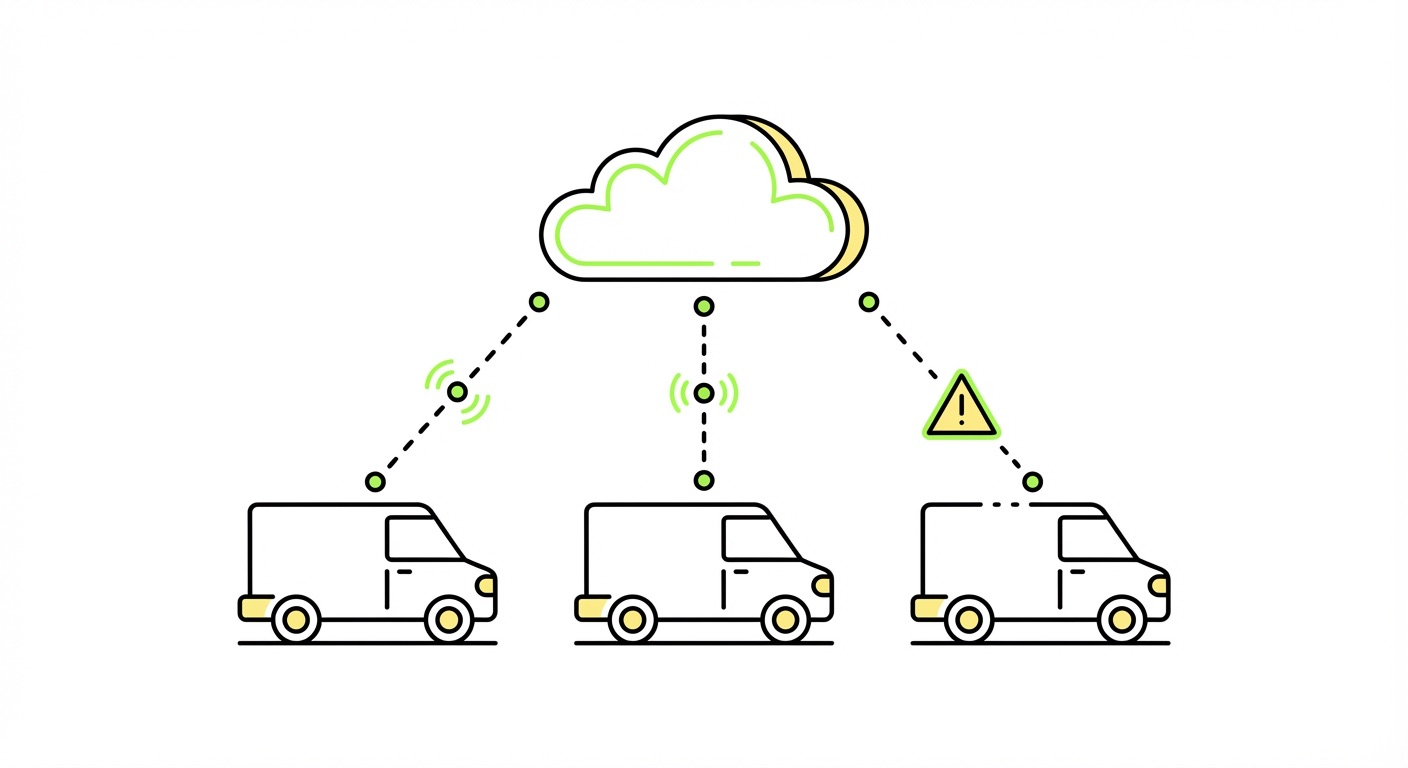
The Intelligent Connectivity features in the Terminal act as an early warning system. Rather than waiting for a monthly usage report, the platform flagged SIMs that were consuming abnormally large amounts of data in real-time. This allowed us to:
- Identify faulty hardware units before the "bill shock" arrived.
- Temporarily kill the connection remotely to investigate the root cause.
- Prevent a single stuck update from becoming a fleet-wide financial disaster.
- Helped us flag down problematic devices for the client before they did.
4. Slack integration: Bringing the fleet to the team
Managing a fleet shouldn't mean staying glued to a dashboard. By using the Slack integration, we moved our most critical alerts - like data limit breaches or connectivity issues - directly into our team's daily workspace.
Instead of an alert getting buried in a single person's inbox, the entire operations team saw the notification instantly. We could discuss the issue in the thread, resolve it, and move on. It turned "connectivity management" from a lonely task into a collaborative, real-time process.
The bottom line
When you scale to hundreds of thousands of devices, the "best" platform isn't the one with the most buttons. It’s the one that gets out of your way and lets you manage your business, not your SIM cards.
Having sat on the client side of the desk, 1oT Terminal is the only tool I’ve used that feels like it was designed by people who have actually felt the pressure of managing a global fleet.
Want to see these automations in action? If you’re managing a growing fleet and want to see how the Terminal can streamline your operations, book a demo with the 1oT team today.









.avif)



.avif)