What fleet OEMs get wrong when embedding connectivity

Mikk Lemberg
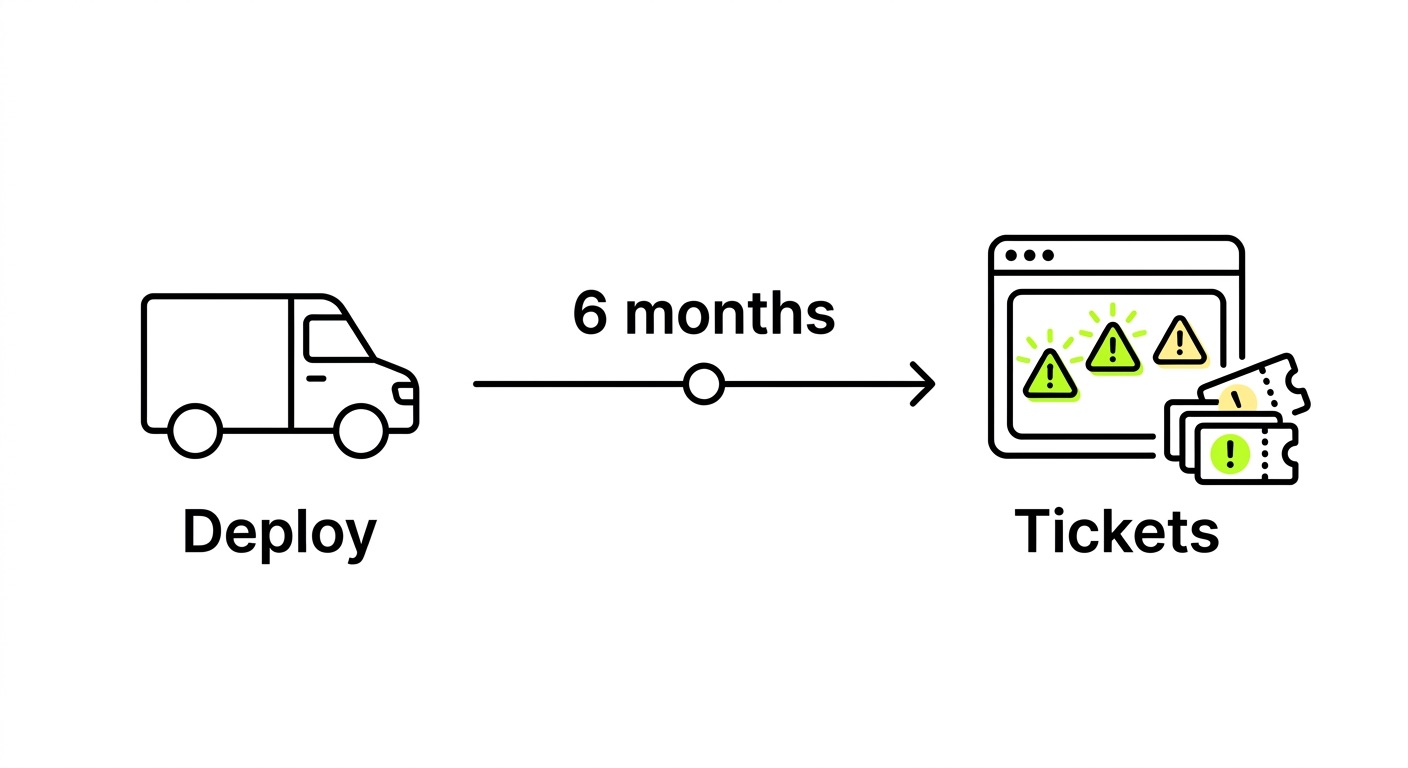
Most connectivity problems in fleet vehicles aren't discovered during engineering reviews. They surface six months after deployment, in the form of support tickets, unexplained dropouts, and vehicles that appear online but aren't transmitting data. By then, the hardware is locked in and the fixes are expensive.
Having worked with fleet OEMs across dozens of markets, we've seen the same mistakes surface repeatedly – and almost none of them are hardware failures.
In this article
- The planning mistake that compounds everything else
- Technical pitfalls that survive into production
- The single-carrier trap
- Why roaming isn't a simple global solution
- How eSIM architecture changes the equation
- Frequently asked questions
- Key takeaways
The planning mistake that compounds everything else
The most common OEM mistake isn't technical – it's treating connectivity as a procurement decision rather than an architectural one. Connectivity gets specced late, handed to a purchasing team, and resolved by selecting whatever carrier already has a relationship with the vehicle program. Hardware gets designed around that choice, and by the time anyone asks "what happens when this network has an outage in Germany?" it's too late to change the answer.
This matters because connectivity decisions made at the module-selection stage determine what's possible for the entire vehicle lifetime – often a decade or more. Choosing a single-carrier SIM or a module that only supports one radio technology isn't just a connectivity decision; it's a ceiling. Everything downstream – international expansion, carrier renegotiation, network sunset response – is constrained by it.
The teams that get this right treat connectivity architecture the way they treat braking systems: as a safety-critical, serviceability-critical decision that shapes product design from the start, not an afterthought resolved at bill-of-materials review.
Technical pitfalls that survive into production
Even OEMs who plan carefully run into a cluster of technical failures that are largely invisible until deployment scale exposes them. These are the ones we see most often.
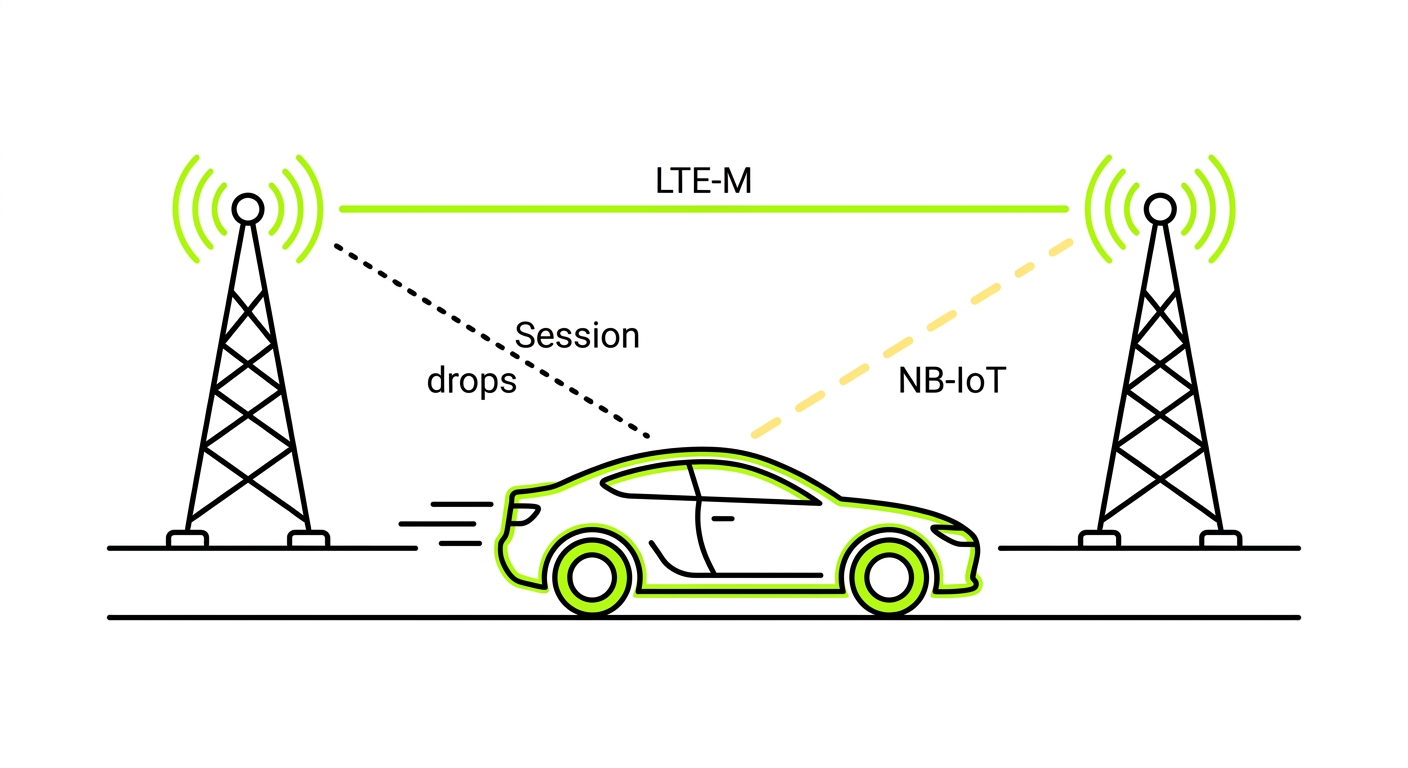
Wrong network technology for a moving vehicle. NB-IoT does not support traditional connected-mode handover like LTE. A vehicle moving between towers experiences session drops, not seamless handover. For any fleet application – GPS tracking, diagnostics, driver alerts – LTE-M is one of the appropriate choices for mobile assets. NB-IoT belongs in stationary assets. Using it in moving vehicles is one of those decisions that looks fine in a lab and fails on the motorway.
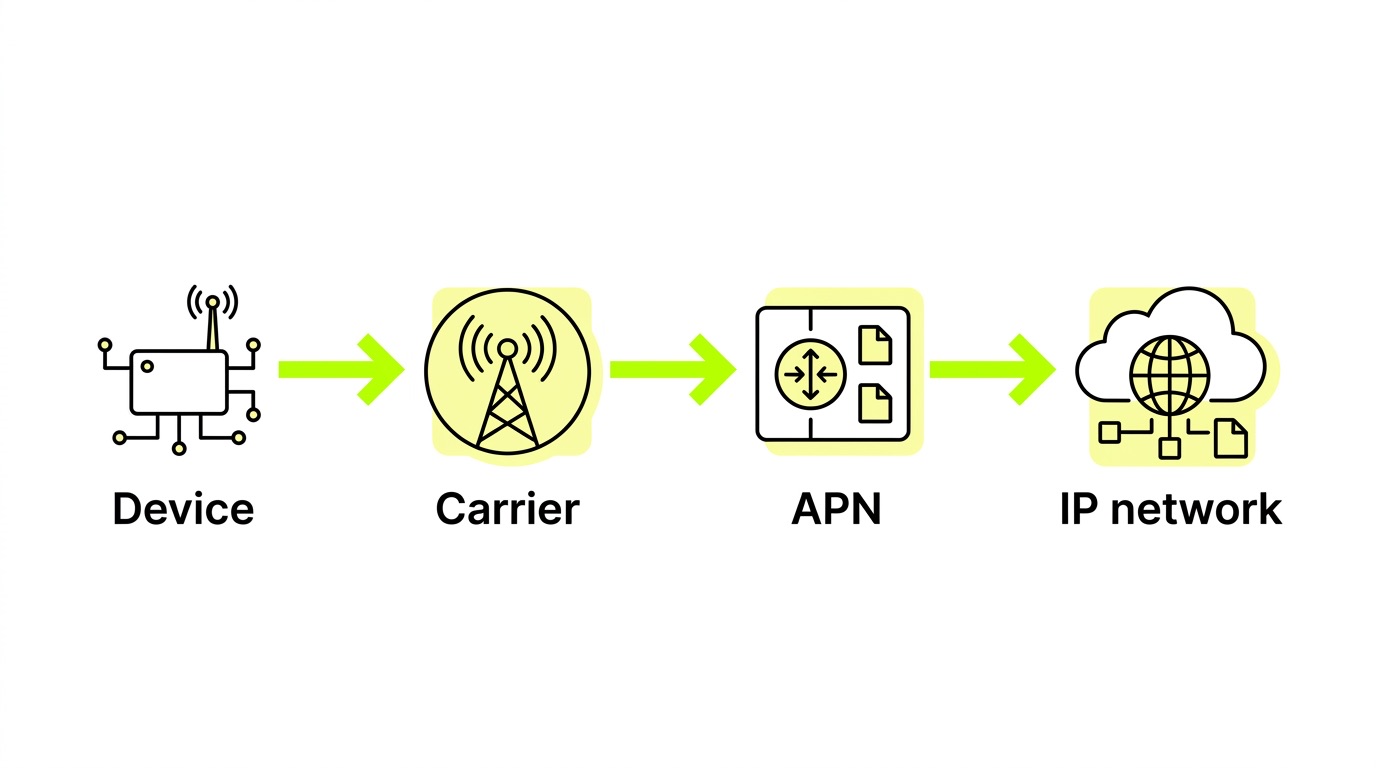
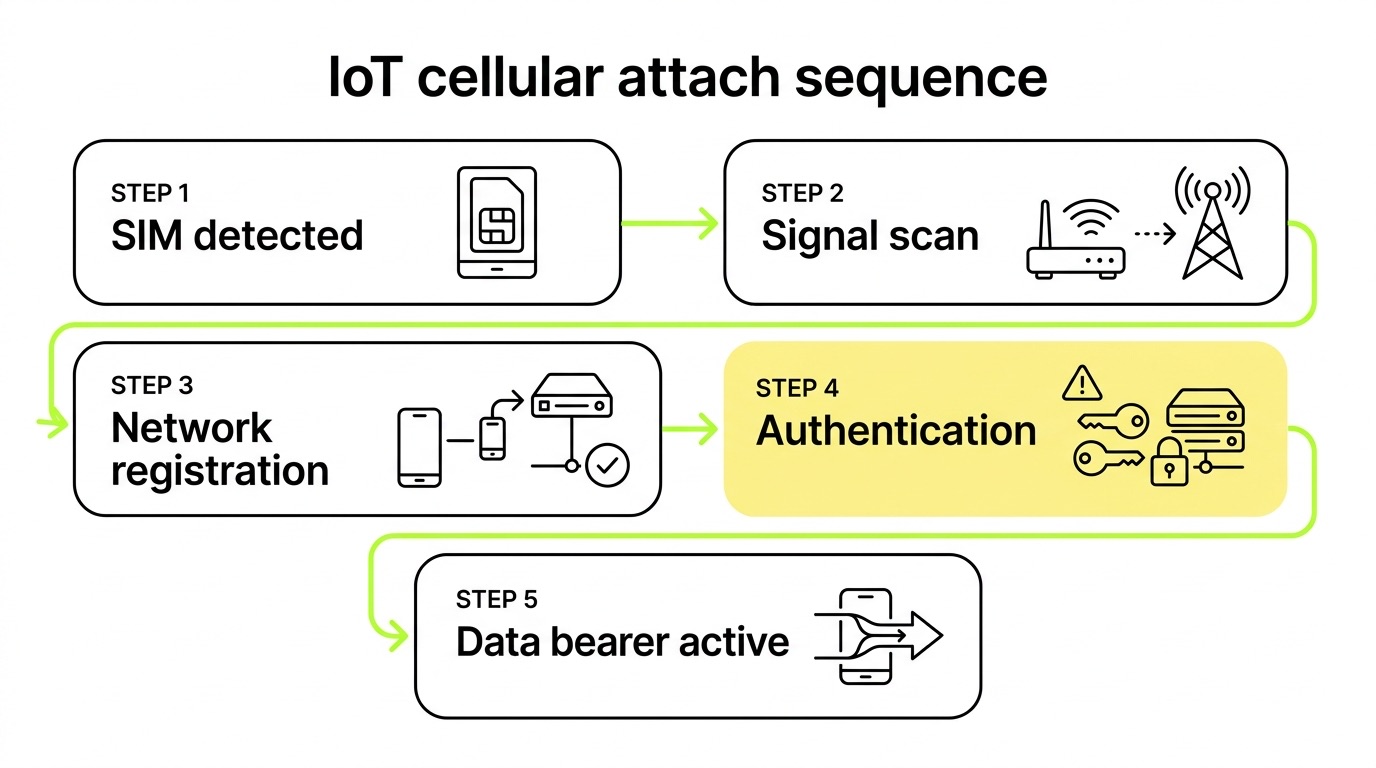
APN misconfiguration. Incorrect or missing Access Point Name configuration is consistently the most common and most preventable fleet connectivity failure. A device can show full signal – radio registration is working – but fail to establish a data session because the APN is wrong or missing for the target country. The device looks connected. It isn't. This is especially damaging in multi-country deployments where APN settings must be validated market by market before any rollout scales. However, with 1oT’s single APN, you dont need to change APN each time the device enters a new region.
Forbidden network registration loops. When a SIM attmpts to attach to a network that the home operator has blacklisted, the device enters a repeated attach-rejection cycle. This mimics hardware failure in diagnostics, drains the battery, generates unnecessary signaling traffic, and – at fleet scale – can trigger congestion alerts that lead to SIM suspension across entire device pools. This isn't a single-device edge case; it's a fleet-wide risk documented in GSMA's IoT Device Connection Efficiency Guidelines.
Aggressive reconnect firmware logic. Poor retry logic compounds registration problems. When devices reconnect immediately after failure rather than using exponential backoff, they generate signaling storms that can get entire SIM pools flagged or throttled by operators. This is a firmware problem with a network-level consequence, and it's rarely caught before deployment.
Legacy radio technology. With 2G and 3G shutdowns progressing across Europe and other markets, any OEM still shipping modules with 2G-only fallback is shipping vehicles with a planned obsolescence date built in. The fix – module replacement – requires a truck roll. At fleet scale, that's a significant operational and financial liability.
The single-carrier trap
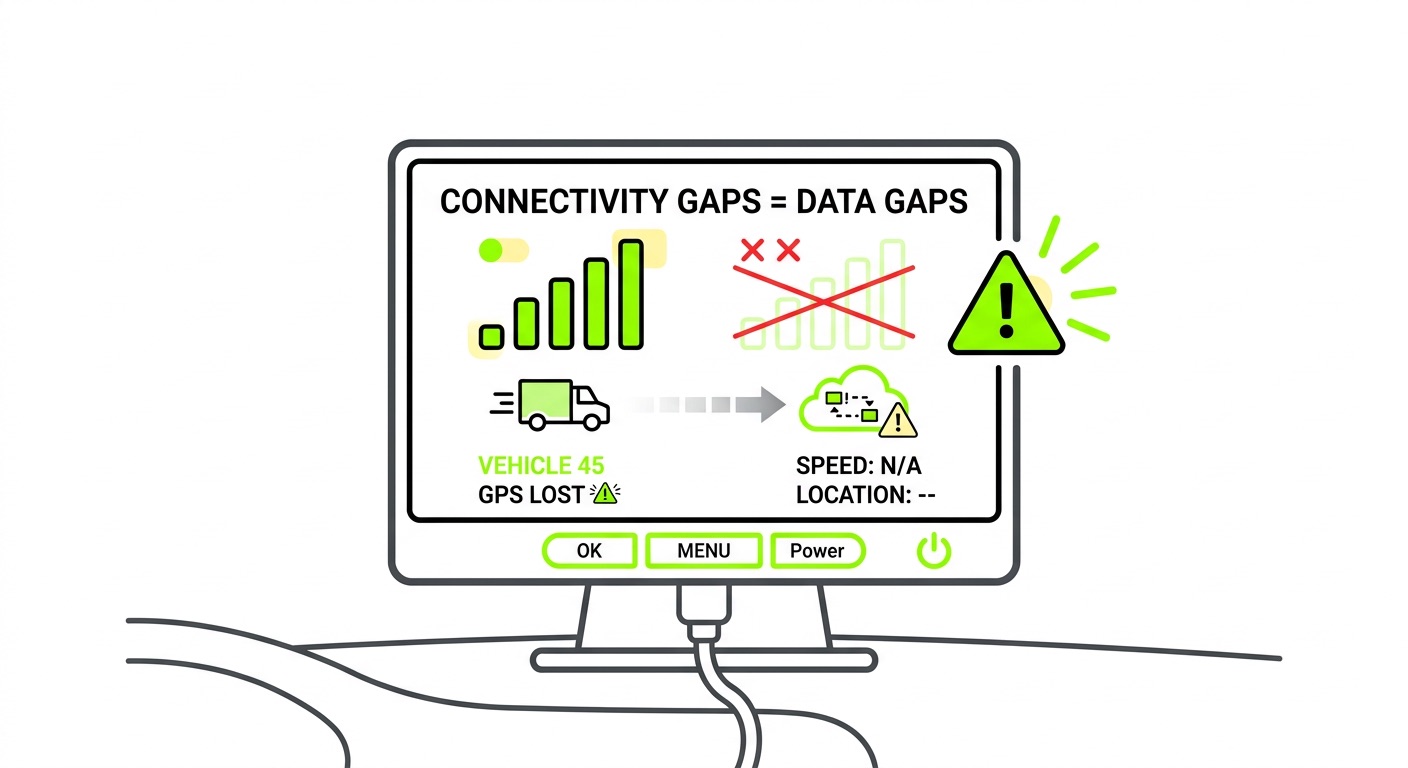
Single-carrier SIMs create a single point of failure. This sounds obvious in principle, but the business pressures that produce this outcome are real: volume discounts from one operator, simplified billing, an existing procurement relationship. The tradeoff only becomes visible when that operator has a regional outage, a maintenance window, or a coverage gap in a market the fleet has just entered. There's no fallback. The entire fleet in that region goes dark simultaneously.
The secondary problem is contractual. Single-carrier arrangements typically don't offer the pricing flexibility or exit options you'll want as the fleet grows or as the operator's priorities shift. Renegotiating from a position of dependency is structurally difficult – the carrier knows you can't swap SIMs at scale without a significant operational program.
International deployments make this worse. SIMs provisioned for one home network often can't switch to local alternatives when the primary is unavailable abroad, and permanent roaming carries both cost and regulatory risks that accumulate over time. Roaming charges scale with data consumption, and the costs fall disproportionately on customers locked into single-carrier arrangements with no leverage to renegotiate.
Why roaming isn't a simple global solution
A common OEM response to international deployment challenges is to rely on roaming – ship one SIM provisioned on a home network and let it roam everywhere. This works, until it doesn't.
Roaming restrictions vary significantly by region and are tightening as regulators move to protect local carrier revenue. Brazil prohibits permanent roaming beyond 90 days. Turkey restricts roaming on the same device beyond 120 days. China prohibits permanent roaming and bans profile swaps outright. North American carriers impose their own informal restrictions even without formal regulation. The full picture of regional roaming restrictions is complex, jurisdiction-specific, and changes frequently.
For a vehicle operating across multiple markets over a decade, a permanent-roaming strategy isn't a solution – it's a risk that compounds. Fleet-wide SIM suspension in a key market isn't hypothetical; it happens when a carrier decides that a pool of devices has been roaming beyond permitted thresholds.
The operational implication is that global fleet connectivity requires localized carrier profiles in key markets, not a single roaming SIM attempting to do everything everywhere. That's architecturally possible only if the underlying SIM technology supports remote profile switching – which brings us to where the industry is actually heading.
How eSIM architecture changes the equation
The structural answer to most of the problems above is carrier-agnostic eSIM with proper management infrastructure. The implementation details determine whether it actually delivers.
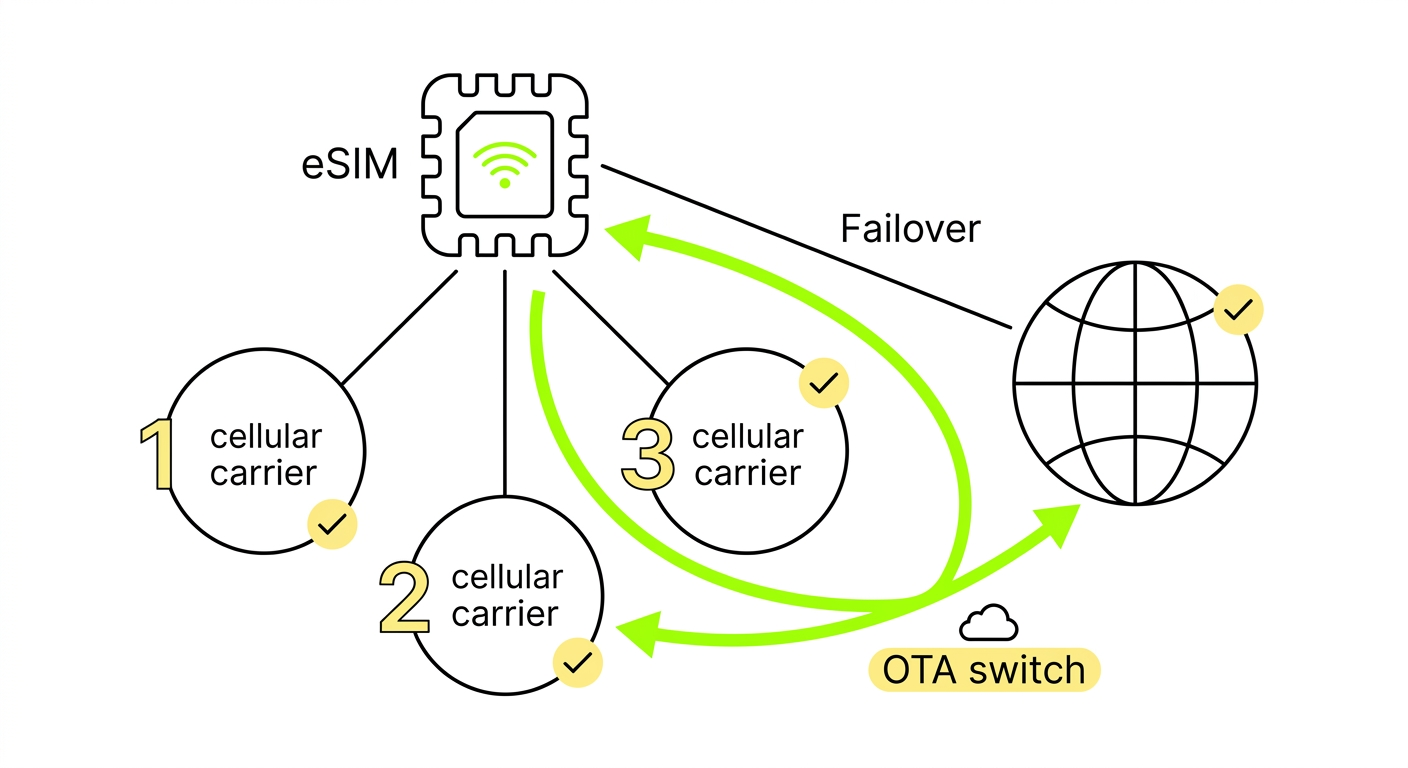
What eSIM enables in practice:
- Over-the-air profile switching – change carrier without physically accessing the device
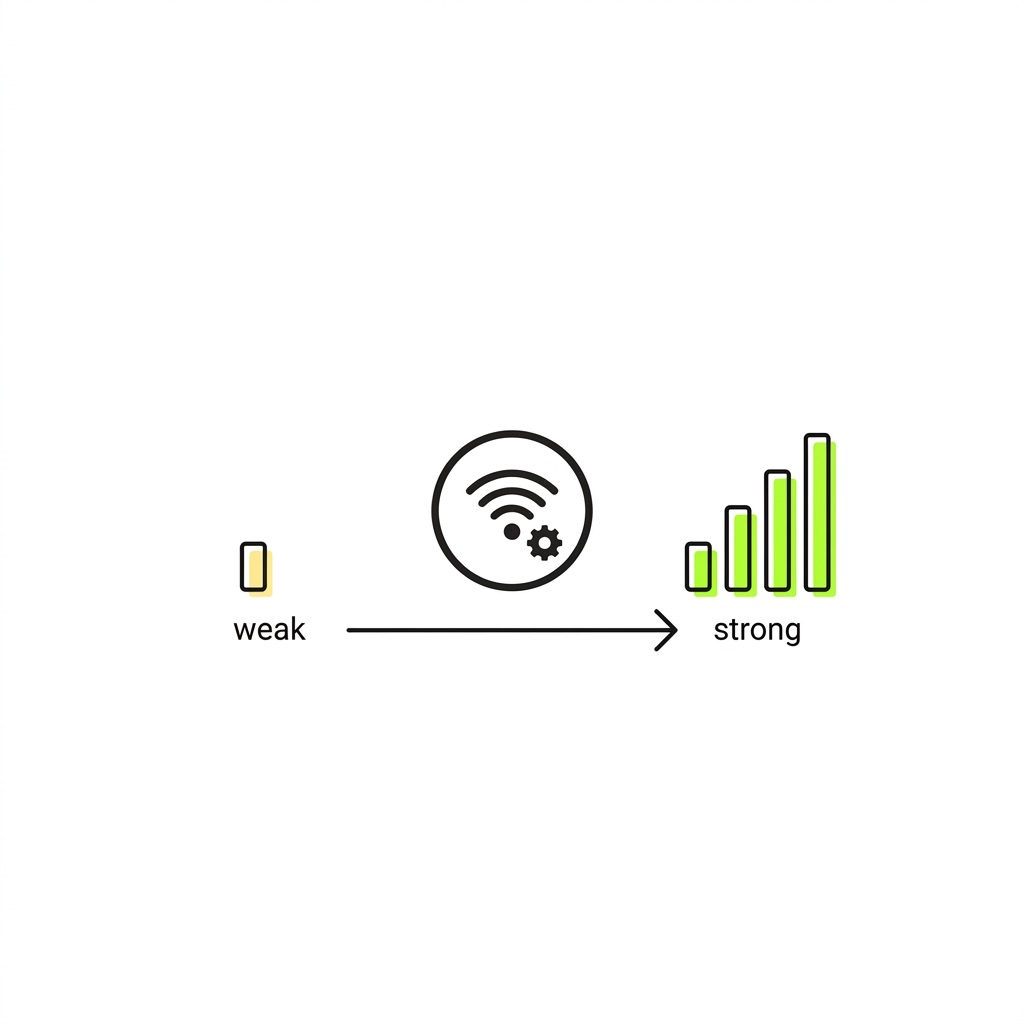
- Multi-network access with automatic failover – when one network is congested or unavailable, devices move to the next best option automatically, without human intervention
- Local carrier profiles in key markets – bypassing permanent roaming restrictions and their associated costs
- Response to network sunsets – update carrier profiles across an entire fleet without truck rolls or hardware replacements
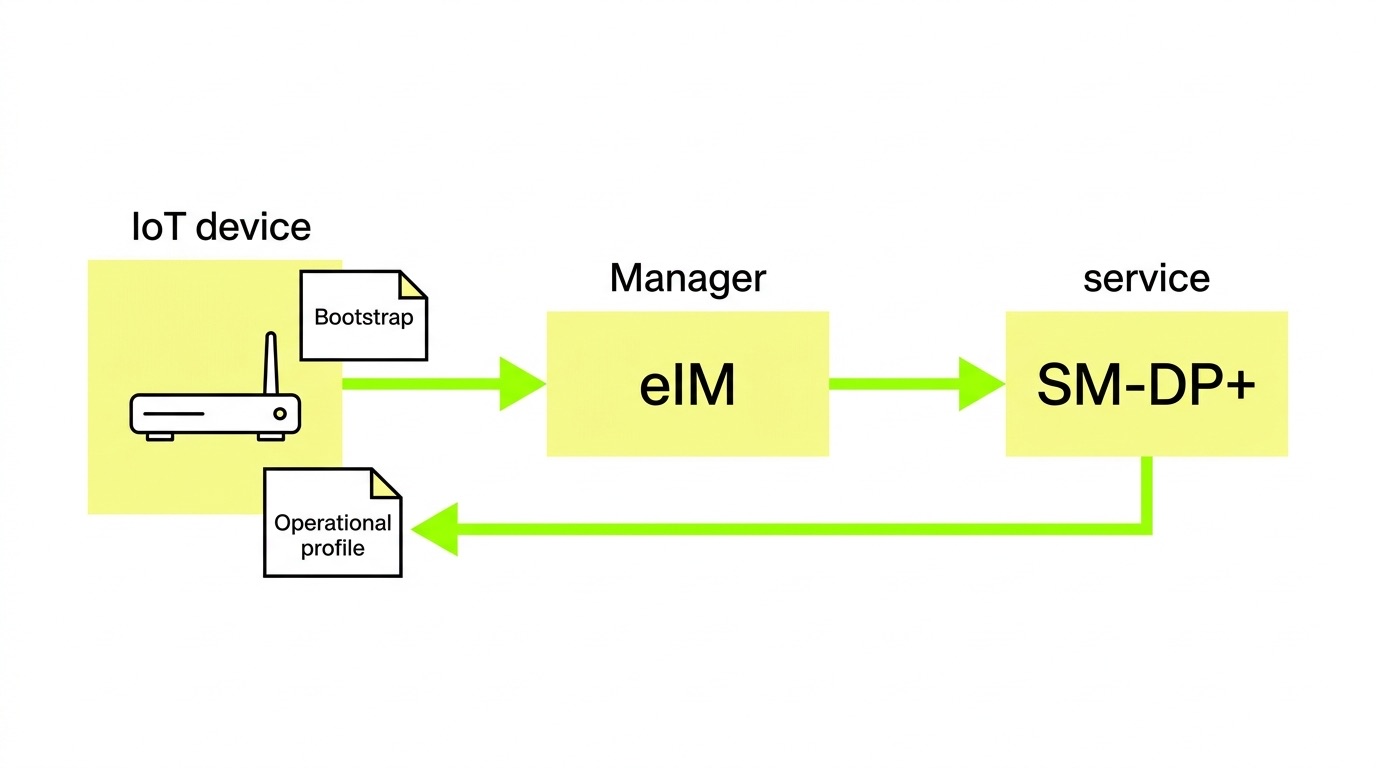
The SGP.32 specification represents a meaningful step forward for IoT deployments specifically. It eliminates SM-SR lock-in, removes the SMS dependency for profile downloads (important for LTE-M networks), and supports multiple transport protocols suited to vehicle telematics environments. Production hardware availability is still maturing, but SGP.32 sets the correct architectural direction for new programs.
What to look for when evaluating a connectivity partner:
- Non-steered SIM policy – devices connect to the strongest permitted network, not a preferred partner that may be congested or underperforming
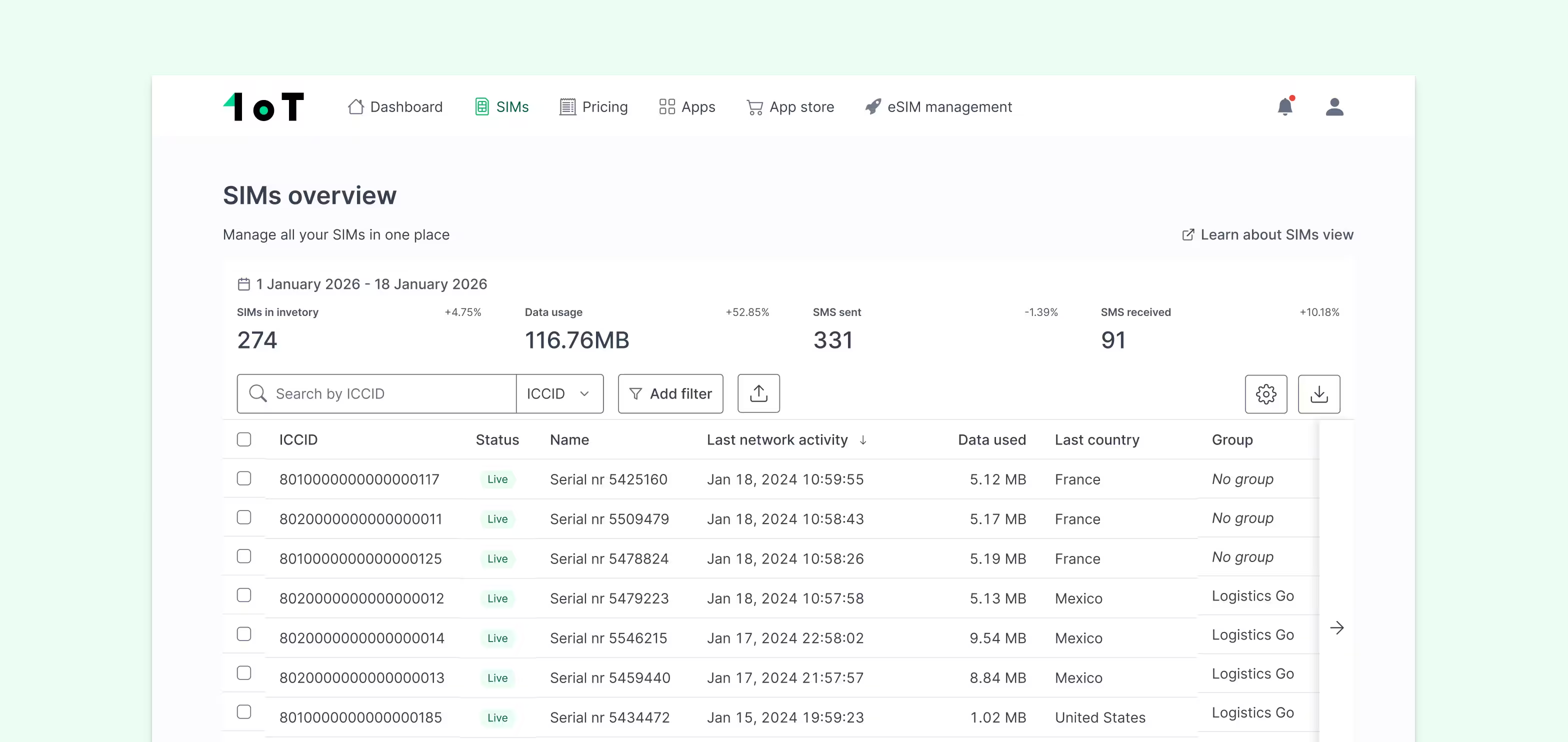
- Session-level telemetry – diagnosing fleet connectivity problems without real-time session data is guesswork; a capable connectivity management platform provides automated alerts, workflow automation, and granular usage data to catch issues before they become fleet-wide incidents
- Multi-network access per country – redundancy within each market, not just headline global coverage numbers
- GSMA certification – GSMA SAS-SM certification matters for both security and interoperability; non-certified solutions introduce risk at the profile provisioning layer that can't be patched away later
Comodule, a micromobility connectivity platform operating across 45 countries, adopted SGP.32 eSIM infrastructure to address the challenge of managing distinct regional network landscapes at scale. The result was reduced SIM inventory overhead and the operational flexibility to adapt to changing regional requirements without logistical complexity – outcomes that matter at any fleet size.
One note on the management layer: orchestration without session-level telemetry isn't orchestration. It's a dashboard that shows you what went wrong after the fact. The platform needs to give you visibility into what's happening in real time, not just a record of past state changes.
Frequently asked questions
Why can't we just use a multi-IMSI SIM instead of eSIM?
Multi-IMSI SIMs can provide network redundancy, but they don't solve the underlying problem of carrier dependency. The identities stored on a physical SIM are fixed at manufacturing. You can't add a new carrier profile for a market you enter two years from now without a physical swap. eSIM with remote provisioning gives you the flexibility to adapt to network conditions, regulatory changes, and market expansion over the vehicle's lifetime – without touching the hardware.
What module should we be specifying for new fleet programs?
For fleet telematics – moving vehicles transmitting GPS, diagnostics, and driver data – specify LTE-M capable modules as a minimum, with Cat 1 bis or Cat 4 as preferred for higher throughput requirements. Avoid NB-IoT for any mobile application; it lacks cell handover and will drop sessions as vehicles move between towers. Validate module support for BIP (Bearer Independent Protocol) if you're planning M2M eSIM remote profile management. Test antenna placement under realistic in-vehicle conditions – bench testing doesn't capture the RF environment of a moving vehicle.
How do we handle connectivity across many countries without managing a separate carrier relationship in each market?
This is where a carrier-agnostic connectivity partner with established operator relationships and a unified management platform adds real value. Rather than negotiating and managing separate contracts in each market, you work with one commercial relationship that provides coverage across markets, handles roaming compliance, and lets you manage all SIMs from a single interface. The key qualification is genuine telecom independence – not a reseller of one operator's infrastructure with a thin management layer on top.
Key takeaways
- Connectivity architecture decisions made at the module-selection stage determine what's possible for the vehicle's entire lifetime. Treating it as a late-stage procurement decision is the root cause of most fleet connectivity problems.
- NB-IoT is unsuitable for mobile fleet applications. LTE-M is the correct choice for any moving vehicle; cell handover support is non-negotiable.
- APN misconfiguration and forbidden network registration are the most common – and most preventable – fleet connectivity failures. Both require pre-deployment validation in every target market, not just a home network test.
- Single-carrier SIM dependency creates fleet-wide outage risk with no mitigation path. Multi-network access with automatic failover removes this single point of failure by design.
- eSIM with carrier-agnostic remote provisioning is the structural solution to carrier lock-in, permanent roaming risk, and network sunset exposure – but only when the management infrastructure includes session-level telemetry and genuine operator independence.
If you're in the early stages of a fleet connectivity program – or revisiting one that's underperforming – explore 1oT's fleet connectivity solutions or review global multi-network coverage to understand what carrier-agnostic access looks like across your target markets.












.avif)



.avif)