Why your IoT SIM was deactivated – and how to prevent it

Mikk Lemberg

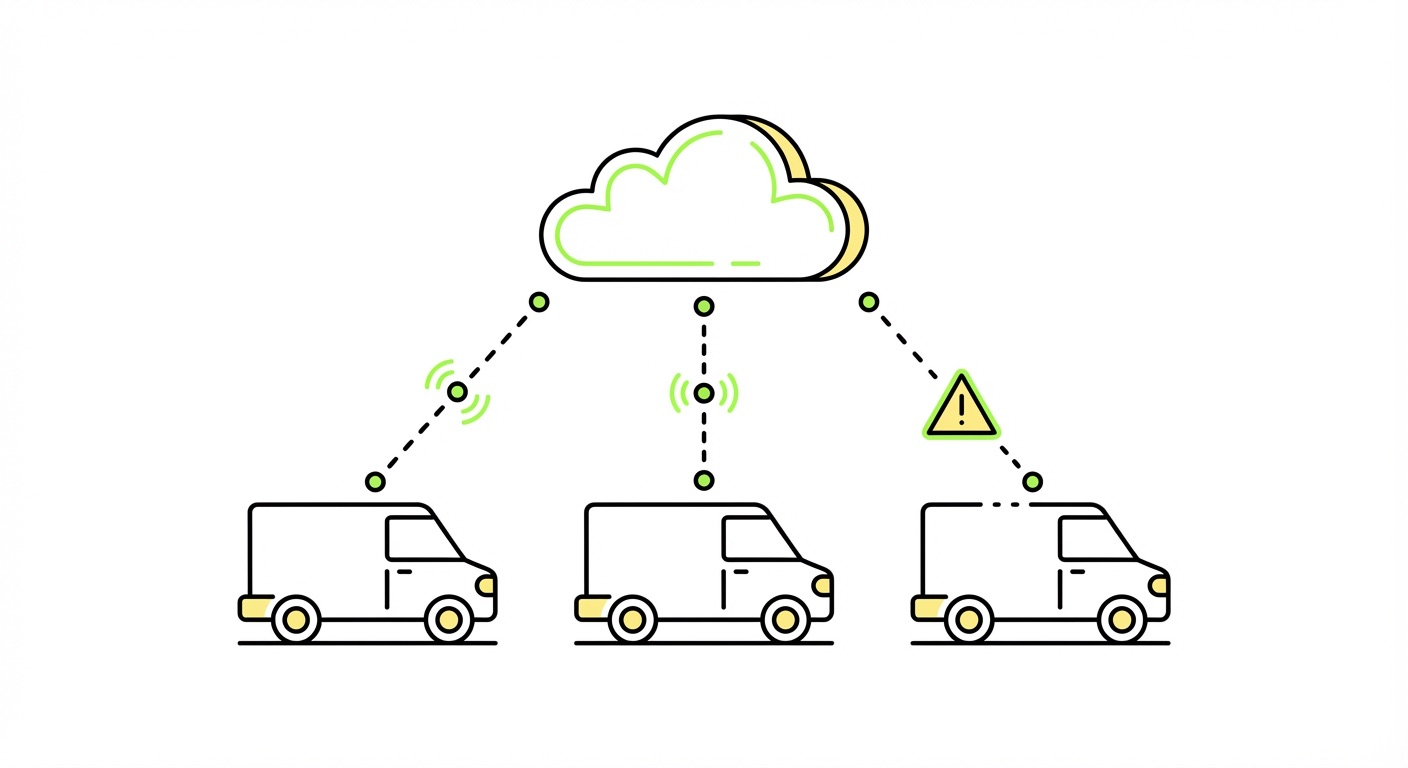
A device that suddenly stops communicating isn't always a hardware fault or a coverage gap. In many cases, the SIM itself has been deactivated – quietly, automatically, and with no alert reaching the people who need to act. Understanding what triggers deactivation, and how to catch it before it cascades into field failures, is one of the more underappreciated operational skills in IoT deployment.
In this article
- The three categories of SIM deactivation
- Technical triggers
- Operator policy triggers
- Account-related triggers
- How to diagnose a deactivated SIM
- What "suspended" vs "terminated" actually means
- How to prevent deactivation at scale
- Frequently asked questions
- Key takeaways
The three categories of SIM deactivation
IoT SIM deactivations fall into three broad buckets: technical misconfigurations that trigger automated network rejection, operator policy violations that flag your SIMs for suspension, and account-level events like unpaid balances or exhausted data allowances. The frustrating reality is that all three can produce the same symptom – a device that stops connecting – without any obvious indication of which cause you're dealing with.
We've seen teams spend days swapping hardware and checking signal strength before realising the SIM was sitting in a suspended state in the connectivity platform. Knowing where to look first saves an enormous amount of time.
Technical triggers
These are deactivations caused by how the device behaves on the network, rather than any billing or policy decision.
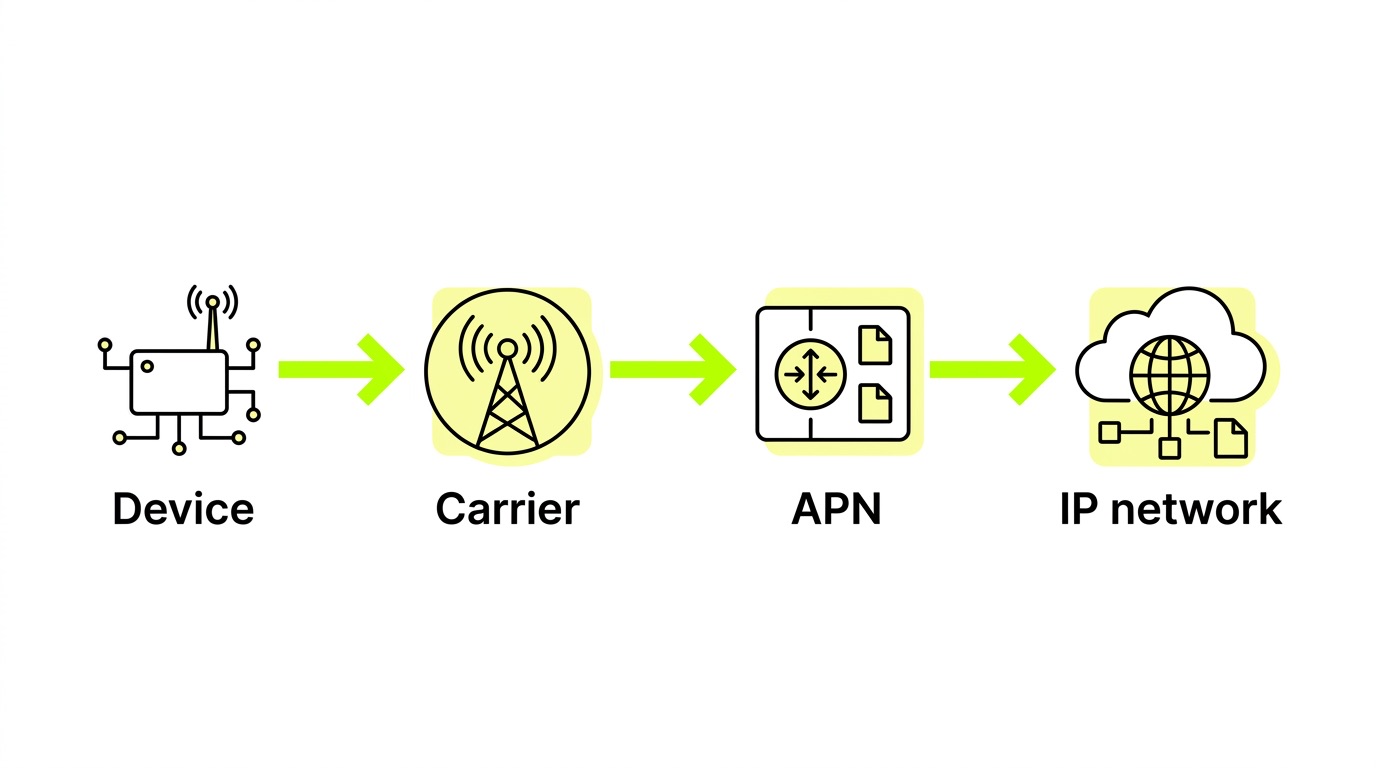
APN misconfiguration is one of the most common culprits. If the Access Point Name string is wrong, the device cannot establish a PDP context – the data session simply never opens. The SIM may register on the network but show zero data activity, which can itself trigger inactivity-based suspension over time.
IMEI mismatches create a similar failure mode. Some operators lock SIMs to specific device IMEIs during provisioning. If the IMEI on the modem doesn't match what's registered in the operator's system, the network will reject the attach request. This is particularly disruptive when devices are replaced or swapped in the field without updating the provisioning record.
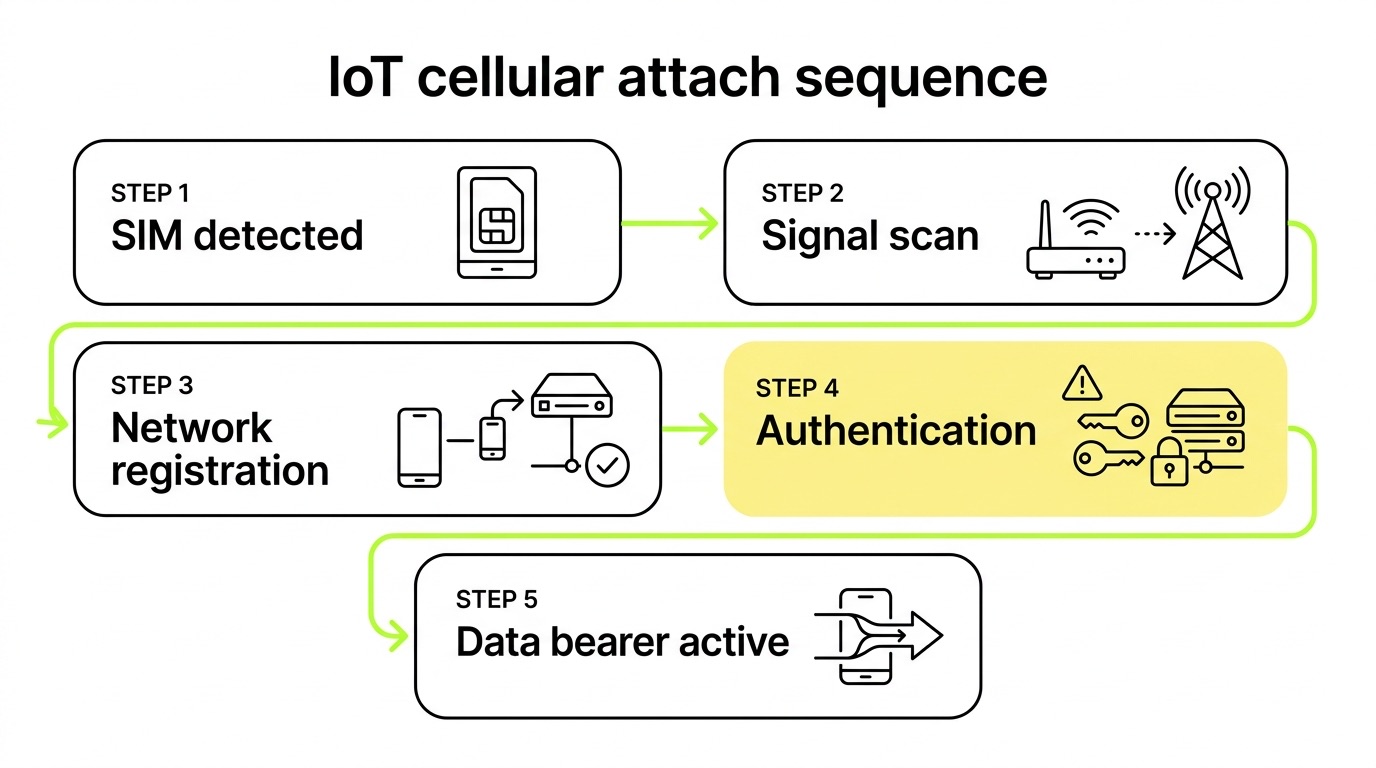
Failed network registration attempts are both a symptom and a cause. A device stuck in continuous registration attempts – due to unsupported frequency bands, PLMN restrictions, or incorrect roaming configuration – generates persistent signalling load on the network. Operators can flag and suspend SIMs that repeatedly fail authentication or generate abnormal signalling traffic.
Legacy network dependency has become an increasingly sharp risk. The 2G and 3G sunsets across the US and parts of Europe left many deployed devices without a fallback. Devices that can only register on sunset networks cease to connect entirely – and if they keep attempting, they may be flagged for abnormal behaviour.
Operator policy triggers
Even correctly configured SIMs can be deactivated if they violate the commercial or regulatory policies underpinning the operator relationship.
Permanent roaming is the most significant policy risk for globally deployed IoT fleets. When a device remains on a visited network for an extended period – typically 120 or more days in markets like Turkey, and effectively prohibited in China and Brazil – the operator may block data services or flag the device's IMEI. The rules vary considerably by region; our article on navigating roaming restrictions covers the key markets in detail. What's consistent across regions is that permanent roaming, without a local profile solution, is a deployment risk that compounds quietly until devices start going offline.
Fair-use and abnormal traffic policies are less discussed but regularly triggered. Operators set statistical usage norms for their IoT customer base. Devices that consume significantly more data than average – often due to a firmware malfunction creating runaway data sessions rather than deliberate misuse – can exceed fair-use thresholds and be throttled or suspended. Operators have mechanisms to protect network infrastructure from saturation, and these mechanisms don't distinguish between intentional and accidental overuse.
Regulatory compliance requirements vary by market but can result in account-level restrictions that affect all SIMs on an account. KYC requirements in certain markets, local registration obligations, and data localisation rules can all trigger service interruption if not addressed proactively. Understanding these obligations before deployment – not after devices go dark – is the only way to manage them.
Account-related triggers
These are entirely preventable – but they're also the category most likely to catch teams off guard because the failure happens in a billing system rather than on the network.
The most common account triggers include:
- Exhausted data allowances: When a SIM reaches its data cap, many operators move it to a disabled state immediately. In pooled account structures, a single high-consuming device can drag other SIMs offline if the pool ceiling is hit.
- Unpaid balances: Automatic suspension on overdue accounts is standard. In large deployments with complex billing cycles, this is a real operational risk.
- Prolonged inactivity: SIMs that show zero data usage for extended periods – often several months – are candidates for automatic suspension or termination as operators reclaim resources. Test SIMs left active after a deployment ends are a frequent offender here.
- Expired plans or missed lifecycle actions: Failure to renew a data plan or complete a required re-profiling step can silently expire a SIM's active status.
The absence of notifications compounds all of these. Unlike consumer mobile, IoT SIM management is often fully automated – there's no one watching an inbox for a low-balance warning. Monitoring has to be built into the platform layer, not bolted on afterwards.
How to diagnose a deactivated SIM
When a device goes dark, work through this diagnostic sequence before replacing hardware or escalating to the operator.
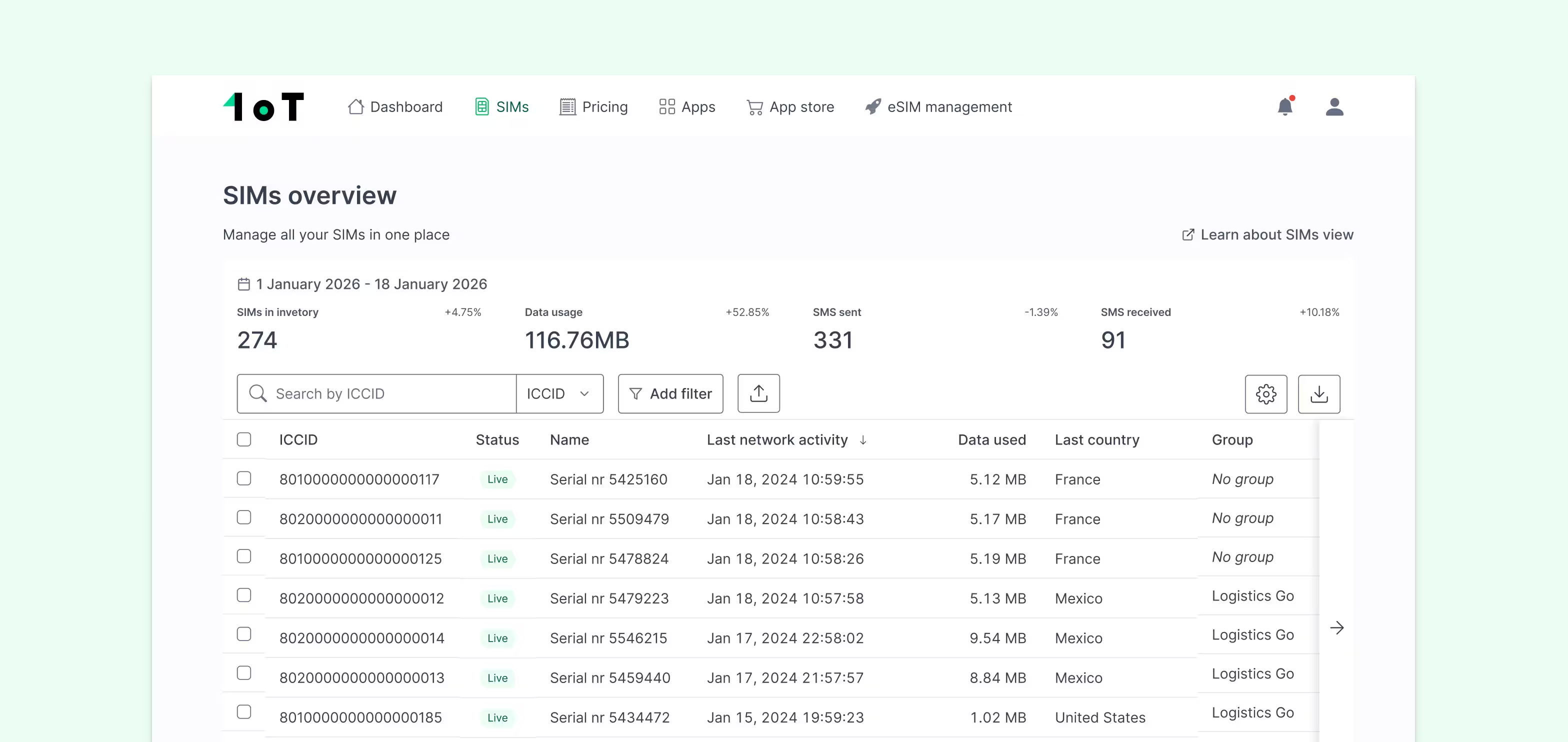
- Check SIM state in your connectivity management platform. Look for active, inactive, suspended, disabled, or terminated status. No connectivity logs at the time of the failed connection attempt is a strong indicator of deactivation due to data limits or billing – rather than a network issue.
- Run AT+CREG? on the module. This returns the network registration status. A response of
+CREG: 0,3means registration denied – the network is actively rejecting the SIM. Our beginner's guide to AT commands walks through the full set of response codes and what each means in practice. - Check PDP context configuration. Use
AT+CGDCONT?to verify the APN string is correct, andAT+CGACT?to confirm whether a data session is active. A device that registers but never opens a data session points to APN or authentication misconfiguration. - Review connectivity logs for MCC/MNC patterns. Multiple failed registration attempts in succession suggest authentication failure, disabled data roaming, or PLMN restrictions. Absence of "Data"-type log entries despite successful registration indicates the data session is not being created.
- Check the Forbidden PLMN (FPLMN) list. When a SIM is suspended, compliant modules add the network to the FPLMN list and stop retrying. A device reboot is required after changing SIM status from suspended back to active to clear this list – otherwise the device stays offline even with the SIM reactivated.
- Test the SIM in a secondary device. If registration is denied in a different device, the issue is the SIM or the operator account. If the secondary device connects, the problem is device-side.

What "suspended" vs "terminated" actually means
These two states look identical from a device perspective – both return a permanent reject cause – but they have very different implications for recovery.
The distinction between inactive and suspended matters operationally. Inactive is designed for temporary traffic halts and uses a temporary reject cause that keeps the device attempting reconnection. Suspended sends a permanent reject, which compliant modules interpret as a signal to stop trying entirely – protecting network infrastructure from the signalling burden of repeated failed attempts. Terminated is the same signal, but the SIM cannot be reactivated under any circumstances.
How to prevent deactivation at scale
Most SIM deactivations are preventable with the right combination of monitoring, platform tooling, and network design.
Automated usage monitoring and alerting is the foundation. Configure data and SMS thresholds in your connectivity management platform to trigger alerts before limits are reached – not after. This applies at both the individual SIM and pooled account level. Workflow automation rules can automatically suspend high-consuming SIMs before they exhaust shared allowances, preventing a single malfunctioning device from taking the rest of the fleet offline.

Staged provisioning and pre-deployment testing catches APN and IMEI configuration errors before they reach the field:
- Confirm APN strings and authentication credentials against your operator's specification before shipping
- Verify IMEI registration matches device hardware, particularly if your supply chain involves multiple module variants
- Activate a small subset of SIMs first and confirm data sessions are established correctly before proceeding to the full fleet
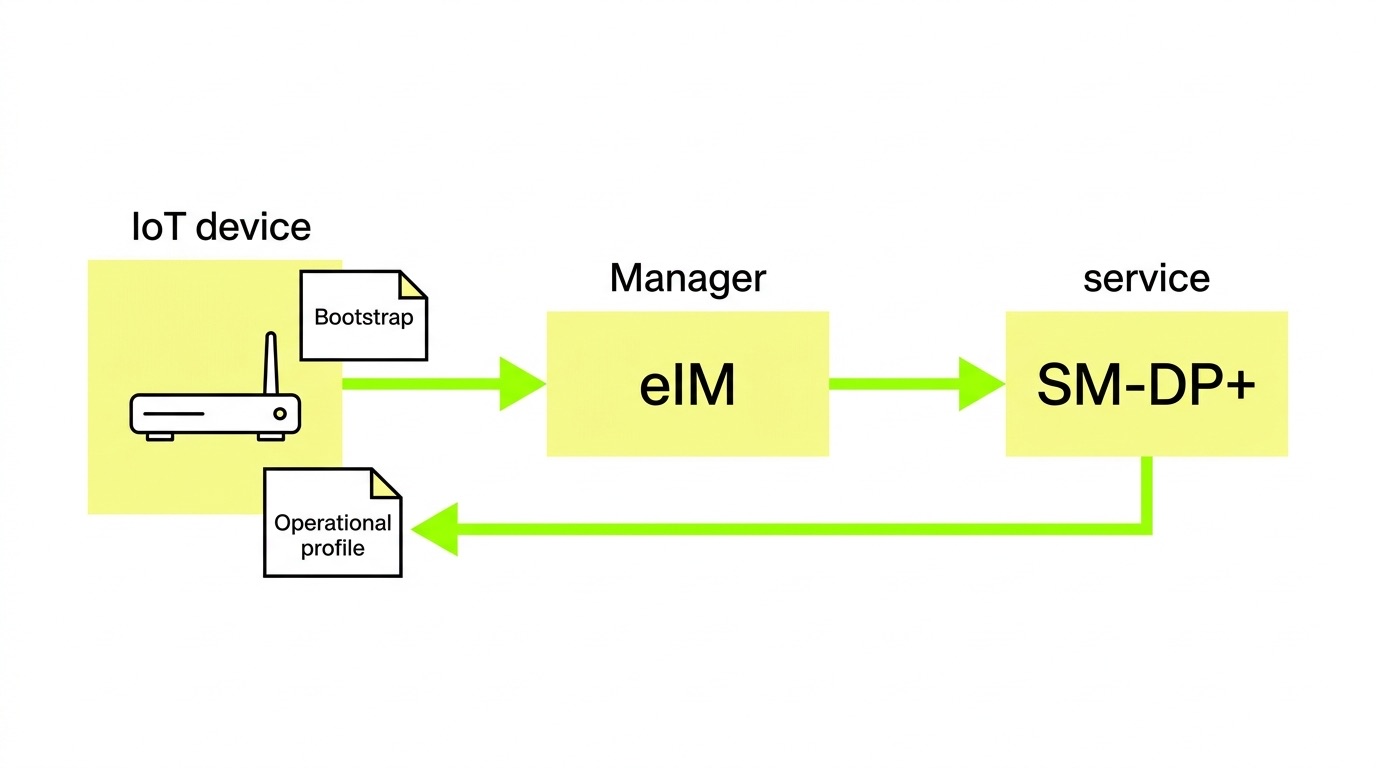
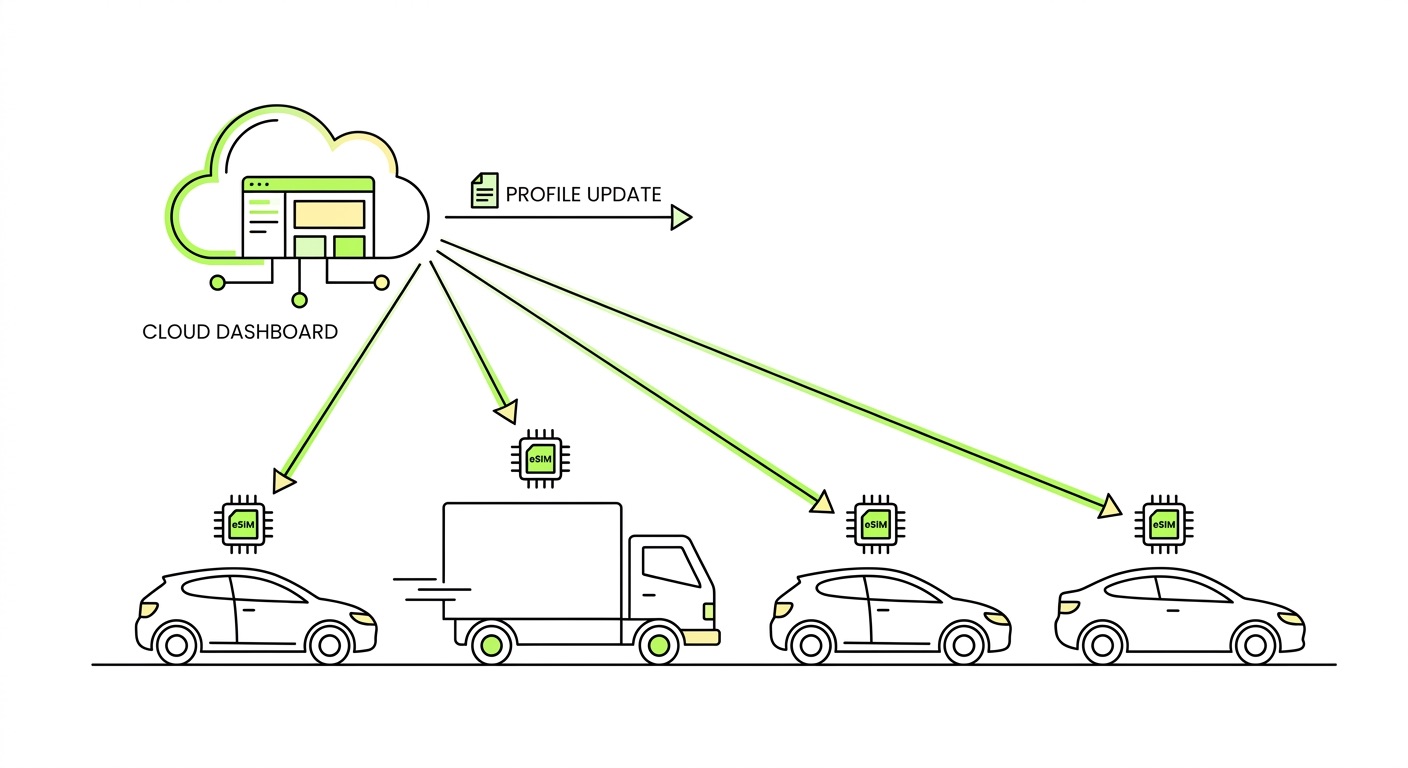
Address roaming risk with local profiles. For devices deployed in markets with permanent roaming restrictions, the only durable solution is a local carrier profile. eUICC-based IoT eSIMs enable over-the-air profile switching to local carriers, removing the permanent roaming exposure entirely. The SGP.32 standard also supports eIM-based orchestration, meaning profile switches can be automated based on device location or operator policy changes – without physical access to the device. For a practical look at how roaming works for IoT and where it breaks down, that context is worth understanding before designing global deployments.
Implement correct reconnection logic in firmware. Devices that receive a permanent reject cause should implement exponential backoff or cease reconnection attempts after a defined threshold. Continuous retry loops after suspension create unnecessary signalling burden on the network and can accelerate escalation from suspended to terminated status.
Disable unused services. Voice and SMS capabilities that aren't required by the application create unnecessary exposure to fair-use policy violations. Disable them at the SIM or APN level, and consider private APN configurations for fleets where security and traffic isolation matter.
Frequently asked questions
Can a terminated SIM be reactivated?
No. Terminated is an irreversible state – the SIM cannot be reactivated and a replacement is required. This is distinct from suspended, which can be reversed through the connectivity platform. Terminated status exists precisely to prevent accidental reactivation of SIMs that have been definitively closed.
Why does my device not reconnect after I reactivate a suspended SIM?
When a SIM is suspended, compliant cellular modules add the network to the Forbidden PLMN (FPLMN) list and stop attempting registration. Reactivating the SIM in your platform changes the operator's status, but the module doesn't know this has happened. A device reboot clears the FPLMN list and allows the module to retry registration. Without the reboot, the device will remain offline even though the SIM is technically active again.
How long does a SIM need to be inactive before an operator suspends it?
This varies by operator and contract terms, but inactivity periods of several months are commonly cited thresholds. The practical implication is that test SIMs left active post-deployment, or devices in seasonal use cases with long off-periods, are at risk of automatic suspension without any billing or traffic event triggering it. The safest approach is to deactivate SIMs explicitly when devices are not in use.
Key takeaways
- SIM deactivation has three root causes – technical misconfiguration, operator policy violations, and account-level events – and all three produce the same symptom: a device that stops connecting.
- Suspended and terminated are not the same. Suspended is recoverable; terminated is not. Suspended SIMs also require a device reboot after reactivation to clear the Forbidden PLMN list.
- Permanent roaming is a structural risk for globally deployed fleets. Markets including Turkey, Brazil, and China actively restrict or prohibit it – eSIM with local profile switching is the correct architectural response.
- Most account-related deactivations are preventable with automated usage monitoring, threshold alerts, and correct SIM lifecycle management built into your connectivity platform.
- Diagnose before you replace. Check SIM state in the platform, run AT+CREG? on the module, and review connectivity logs before escalating to hardware swaps or operator support calls.
Ready to reduce SIM deactivation risk across your fleet? Explore 1oT's IoT connectivity platform to see how eSIM profile switching and automated monitoring can protect your deployments at scale.





.avif)



.avif)