


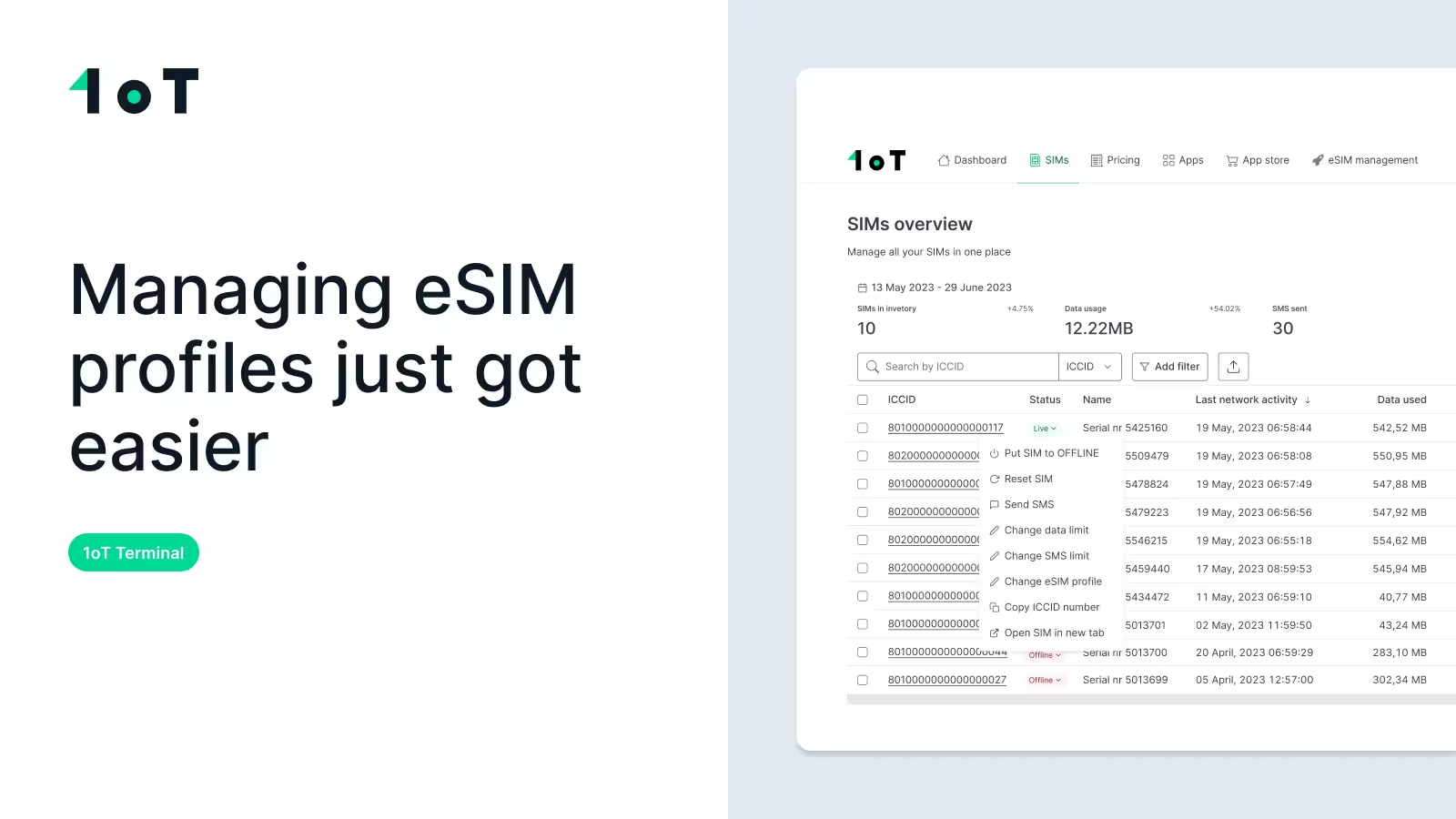
How to manage eSIM profiles step by step – 1oT Terminal video demo
Managing eSIM profiles just got easier. See how 1oT Terminal simplifies telecom profile changes, from download to activation, across your IoT fleet.

Let's look into the most important number combinations and IDs found on a SIM card, what they mean, and why they are necessary.

Technical Support Manager
The world of cellular connectivity and IoT can be full of abbreviations, technical jargon, and endless number combinations that can confuse even hardened industry experts.
Today, we will look into the most important number combinations and IDs found on a SIM card, what they mean, and why they are necessary.
To dissect other parts of the IoT industry jargon, check out our cellular connectivity glossary and read about the differences between SIM types.

ICCID refers to Integrated Circuit Card Identifier, by which each SIM is internationally identified. The 19- to 21-digit number is the identifier of the SIM card itself, i.e. the SIM chip.
ICCIDs are stored in SIM cards and are typically printed on the back of a card during a process called personalisation in SIM manufacturing. Nowadays, ICCID numbers are often also used to identify eSIM profiles.
Here’s how the number is generated:
The last number (sometimes called Checksum) in ICCID is used to validate the integrity of the number after transmission. It’s a single digit calculated from the other digits using the Luhn algorithm.

International Mobile Subscriber Identity (IMSI) is a unique number usually consisting of fifteen digits. The number is associated with a carrier profile to identify a cellular network subscriber.
IMSI is used to acquire information about the cellular device in the Home Location Register (HLR) and to identify, authenticate and track the subscriber in a mobile network. Due to that, the IMSI is sent as rarely as possible and a randomly generated Temporary Mobile Subscriber Identity (TMSI) is sent instead.
The IMSI is used in any mobile network that connects with GSM, UMTS, and LTE networks.
The format is:
The International Mobile Equipment Identity (IMEI) is a unique identifier for the device. GSM networks use IMEI numbers to validate devices and can stop a stolen device from accessing the network.
If a device is stolen, the network provider can use the IMEI number to blocklist the device, preventing it from being able to access the network (and sometimes other networks) even if the SIM itself is changed in the process.

The Mobile Station International Subscriber Directory Number (MSISDN) and IMSI are the two important numbers used for identifying a mobile subscriber. For easier understanding, think of MSISDN as SIM’s telephone number.
The International Telecommunication Union Telecommunication Standardization Sector (ITU-T) has recommended MSISDNs’ maximum length to 15 digits. The minimum length is not specified but is specified in each country's national numbering plans by the telecommunications regulator.
The format is:

The EID, eUICC Identifier, refers to a unique serial number for the eSIMs. It is not related to the service subscriptions and cannot be used to identify the subscribers. However, different national regulatory authorities can issue IIN/ICCID numbers as EIDs using different rules. This alters the operating conditions for manufacturers, sometimes making it difficult for them to obtain EIDs for their eSIMs. In 2019, the GSMA assumed responsibility for the administration of the EID.
The EID is the card's most important number when using an eSIM. The ICCID may change with the change of the active carrier profile, but EID is unique to the card and always remains the same.
If you have any further questions on the topic or want to learn more about 1oT eSIM, contact our Sales Team at sales@1ot.com.
Talk to 1oT about the connectivity, integrations, and support your fleet needs.
Get in TouchManaging eSIM profiles just got easier. See how 1oT Terminal simplifies telecom profile changes, from download to activation, across your IoT fleet.
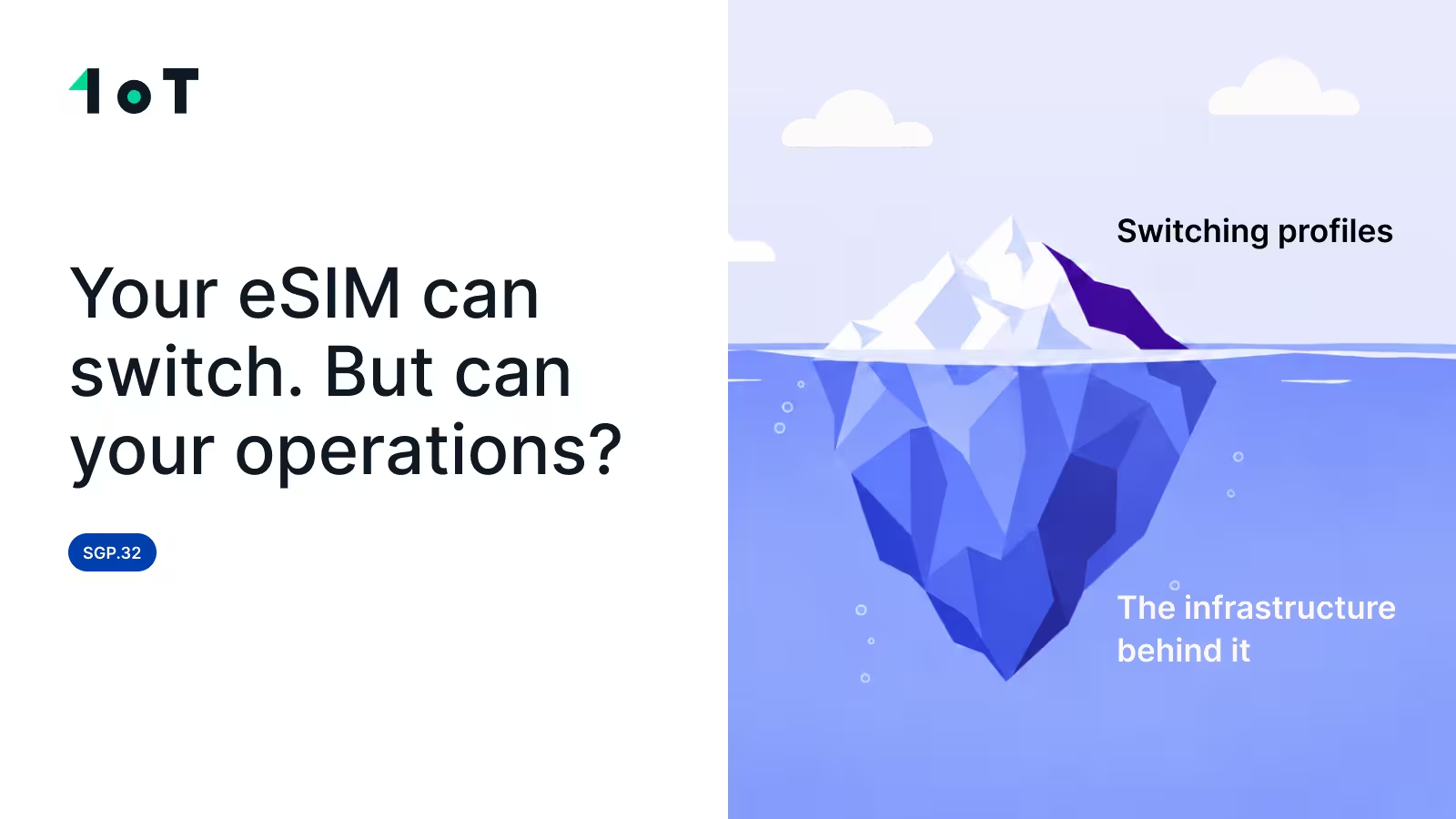
SGP.32 allows you to switch an operator profile remotely. It does not automatically preserve your APIs, alerts, reports, billing, permissions, or support workflows.
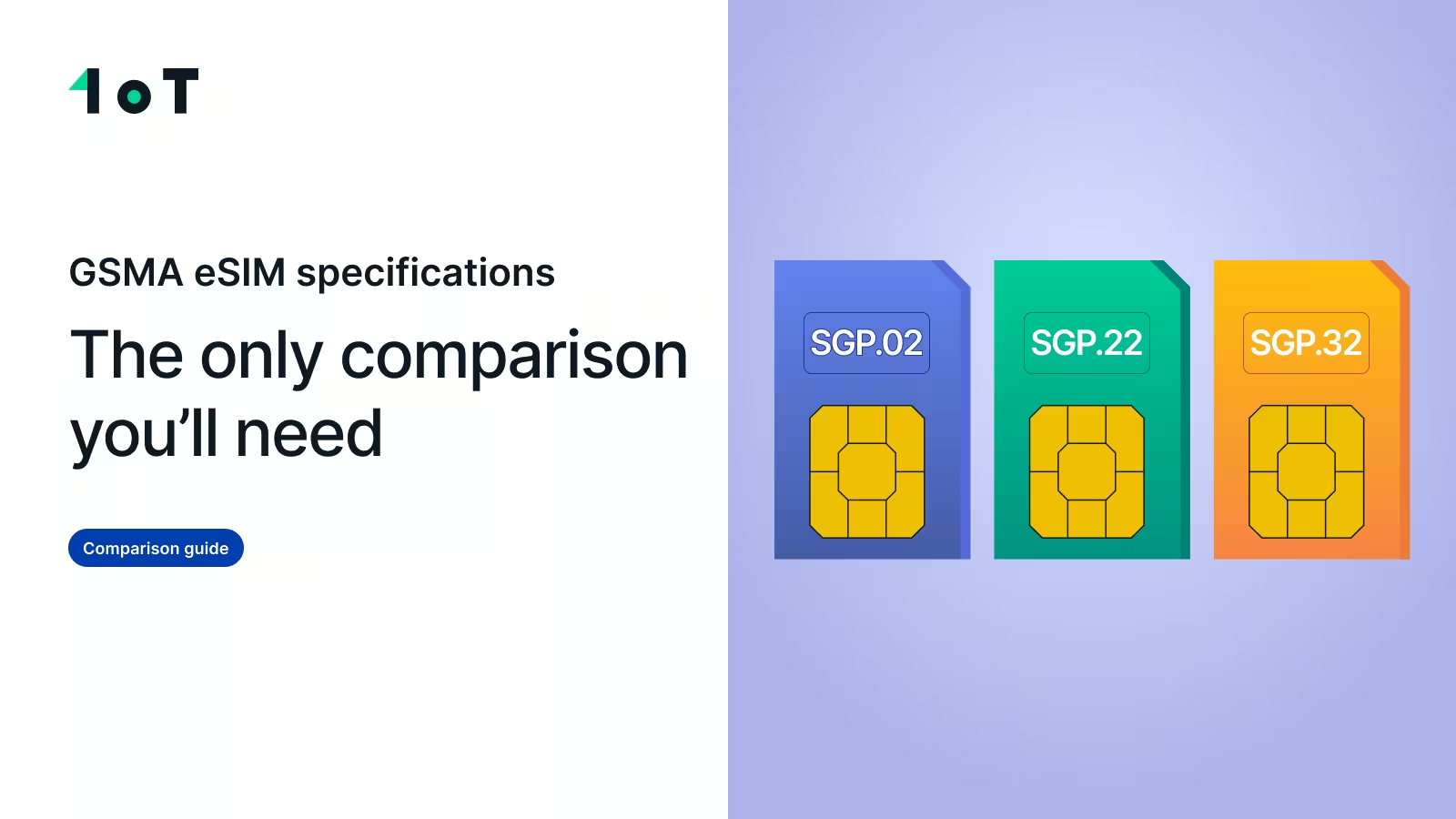
SGP.02 vs SGP.22 vs SGP.32: a practical guide to GSMA eSIM specifications to help you choose the right one and avoid hidden operator lock-in.
numbers-on-sim-card


